






What if some of the most important lessons your child learns happen in moments so small that nobody notices?
When parents think about martial arts, they often picture powerful kicks, impressive forms, and the excitement of earning a new belt. But some of the greatest benefits of martial arts training have little to do with physical techniques. Instead, they tend to happen in the ordinary moments of every class, when a child chooses to listen, keeps trying after making a mistake, or encourages a classmate who is struggling.
Character development doesn’t always require a major challenge or a life-changing experience. More often than not, it’s built through small decisions, repeated consistently over time. Martial arts provides children with countless opportunities to practice positive habits, develop personal responsibility, and solidify the values that will guide them throughout their lives.
Learning Respect Through Everyday Interactions
Respect isn’t just something children are told to demonstrate. It’s a behavior they develop through guidance and practice. In martial arts classes, students experience opportunities to show respect from the moment they walk in. Bowing when entering the training floors, listening while instructors speak, following directions carefully, and treating training partners with kindness are all simple actions that reinforce the importance of respecting others.
What makes these moments so valuable is their consistency. When children practice respect in every class, it gradually becomes a natural part of how they interact with the rest of the world. They begin to understand that respect isn’t reserved for authority figures or special occasions. It’s something they can and should demonstrate through everyday choices, no matter who they interact with.
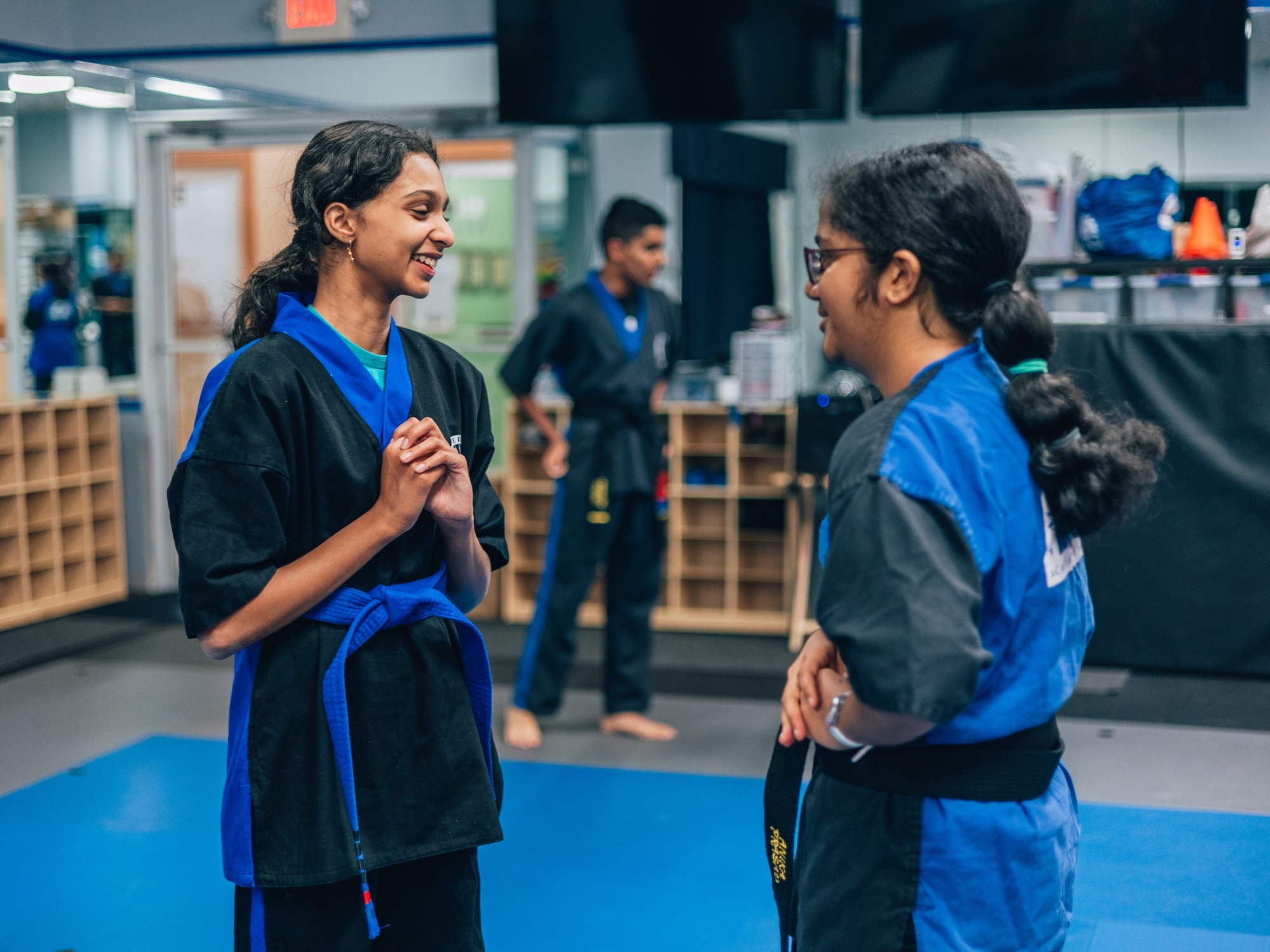
Two SWAT Members practice conversation skills with a smile.
Developing Discipline Through Small Responsibilities
Discipline begins with learning to take responsibility for the little things. During martial arts training, students are expected to line up when instructed, maintain their focus, follow class routines, and put their best effort into every activity. While these expectations might seem simple, each one gives children an opportunity to practice important self-discipline aspects, such as self-control and personal accountability.
Over time, these repeated responsibilities help students develop the ability to make positive choices without constant reminders. A child who learns to stay focused during a challenging drill is also practicing the discipline needed to complete schoolwork. Taking responsibility for remembering techniques also strengthens habits that support independence. Through consistent practice, martial arts teaches children that discipline isn’t just about following rules. It’s about learning to hold themselves accountable, even when nobody is watching.
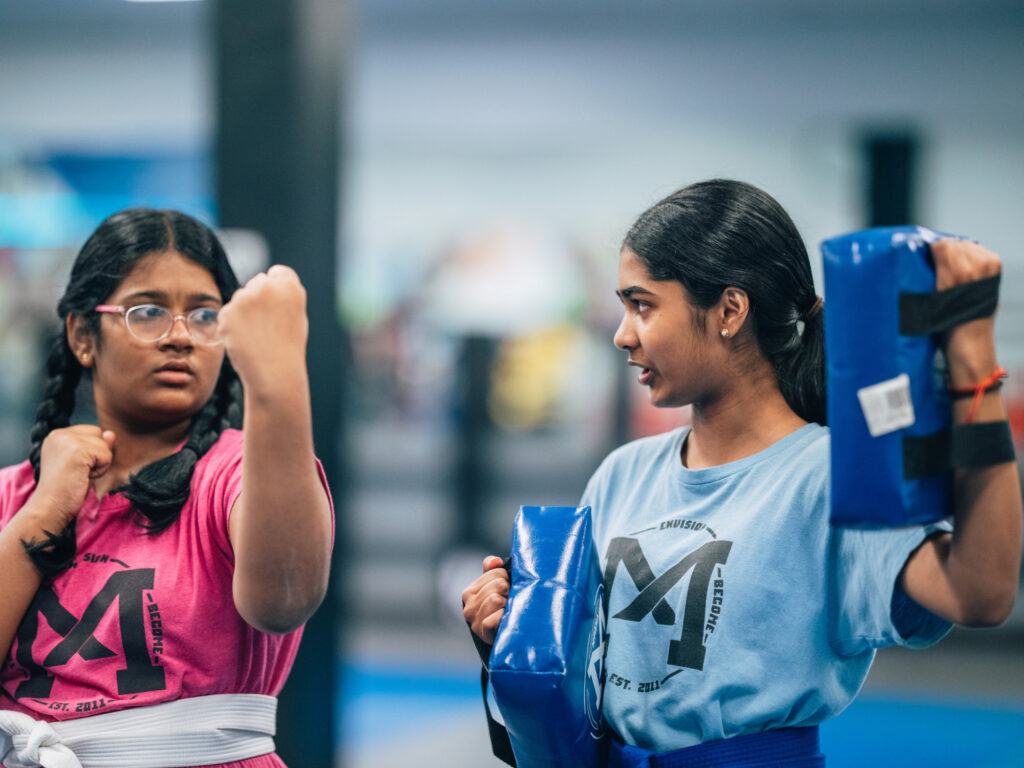
A Blue Belt student helps her White Belt classmate learn and practice a form.
Building Perseverance Through Everyday Challenges
Not every challenge in martial arts is a major test of strength or ability. Sometimes, the challenge is remembering to keep your hands up, losing balance during a kick, or trying to sit still while the instructor explains the next drill. Moments like these happen in nearly every class, and each one presents an opportunity for students to develop perseverance. Instead of expecting immediate success, children learn to accept mistakes, listen to feedback, make adjustments, and continue trying toward their goals.
These small experiences gradually change how children respond to difficulty. Rather than becoming discouraged when something doesn’t come easily, they begin to recognize that improvement takes patience and effort. A student who struggles with a technique one week may be able to perform it confidently by the next, reinforcing the connection between consistent practice and personal growth. As these experiences accumulate, children develop resilience that reaches beyond martial arts, helping them approach challenges at school, at home, and in their relationships with greater confidence and determination.
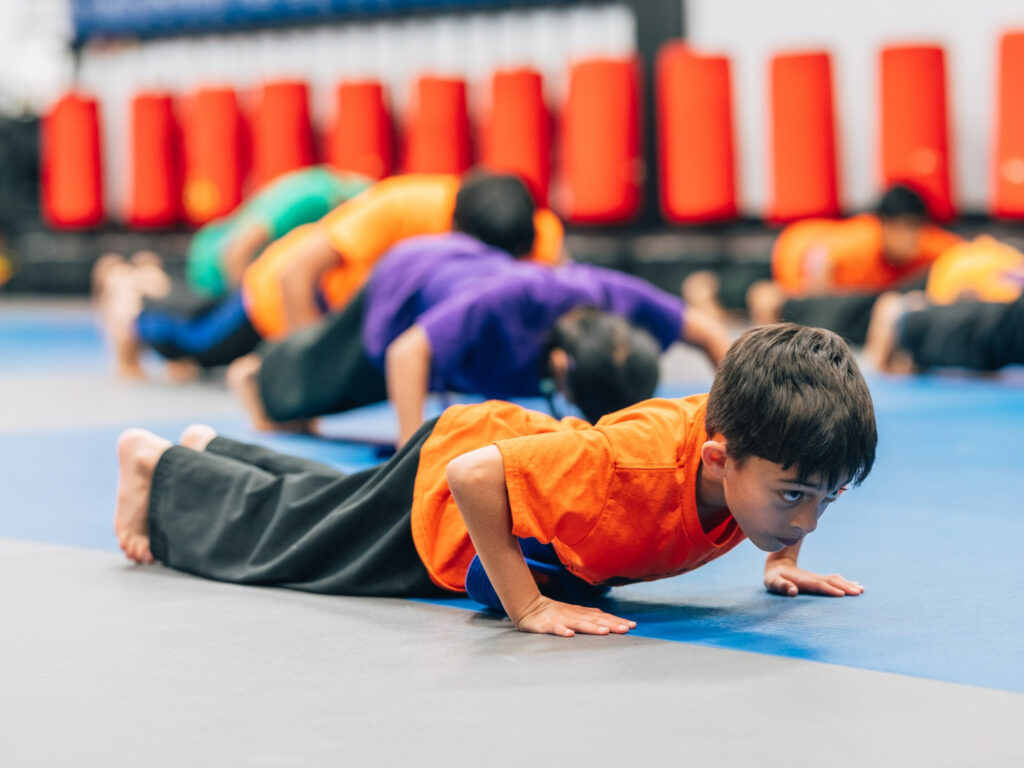
A Blue Belt student practices deep push-ups with proper form.
The MPAMA Way: Making Every Moment Count
At Master Peter’s Academy of Martial Arts, we believe character development should be an intentional part of every student’s training experience, not simply an occasional lesson. That’s why the MPAMA Way emphasizes personal growth through everyday interactions, consistent expectations, and positive reinforcement.
Our instructors look beyond a student’s physical performance to recognize the small moments that demonstrate meaningful character development. Through acknowledging a student who shows kindness to a training partner, encouraging someone to try again after a mistake, or reinforcing the importance of responsibility, we strive to make every class an opportunity for growth. By teaching students to recognize the value of these everyday decisions, we help them understand that strong character is built through the little choices they make each day.
Conclusion
It’s easy to celebrate the big milestones in a child’s martial arts journey. Their first successful board break, the moment they finally master a difficult technique, or their Black Belt promotion. These accomplishments deserve recognition, but the growth that happens between those milestones is just as important.
Every time a child chooses to listen instead of getting distracted, tries again instead of giving up, or supports someone instead of focusing only on themselves, they’re developing the character that will shape their future. The greatest impact of martial arts isn’t always found in what children accomplish during class, but in who they become because of it. And that’s something worth remembering: A child’s character isn’t built in one defining moment. It’s built through the everyday choices that continuously define who they are.