




Leadership is often thought of as something that happens later in life, but it really begins much earlier than many people realize. For kids in martial arts classes, leadership is not taught through lectures or speeches. It is built through daily habits, structure, and most importantly, example.
At Master Peter’s Academy of Martial Arts, students are immersed in an environment where they consistently observe what strong character looks like in action. Instructors and coaches demonstrate desired behaviors during classes. Over time, they begin to mirror it, practice it, and eventually embody it themselves. This is how leadership takes root naturally, one class, one behavior at a time.
Instructors Model Discipline
One of the most powerful ways children learn leadership is by observing how instructors carry themselves. From the moment class begins, instructors demonstrate structure, focus, and respect for the classroom environment. Students see that leadership is not about being loud or dominant, but about being consistent and responsible.
As children repeat these experiences, they begin to adopt the same habits. They line up quickly, listen attentively, and take pride in doing things correctly. They’re not just told to be a leader, they start practicing the behaviors that define one.
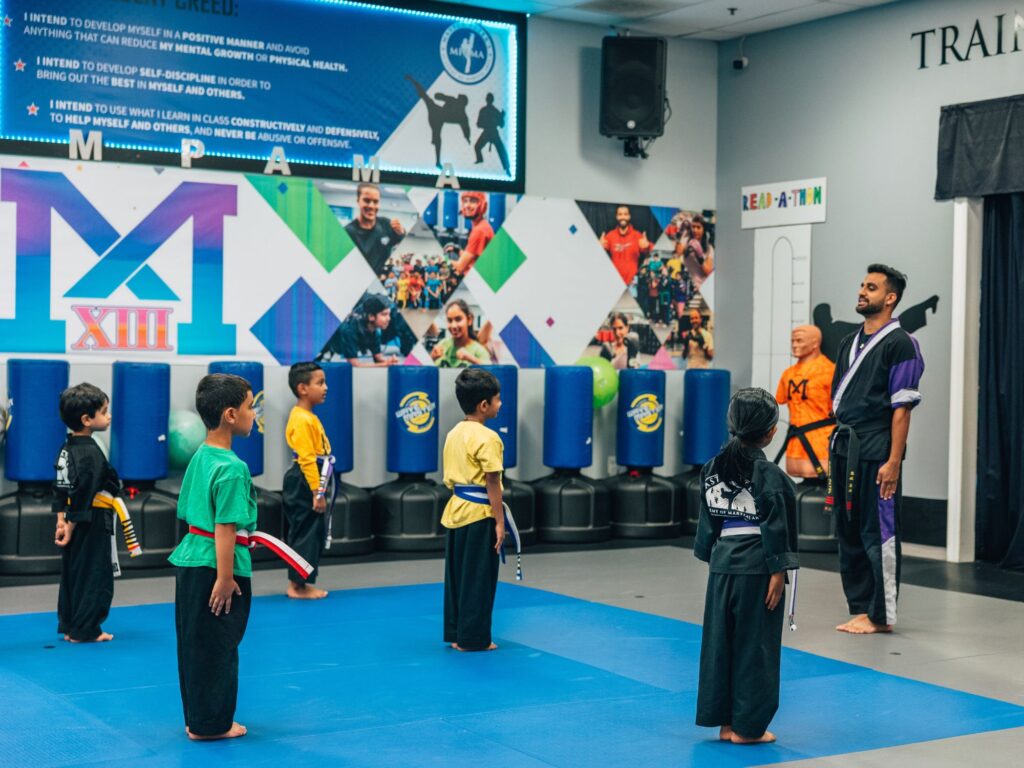
An instructor stands in front of a class of Little Dragons, modeling how to stay still and focus.
Respect Is Demonstrated First
In martial arts classes, respect is not just a topic of conversation. It is shown through the way instructors interact with students, how they speak to them, and how they correct mistakes. Kids notice when respect is given consistently, even during challenging moments.
Over time, students begin to reflect that same respect toward their instructors and peers. They learn to wait their turn, encourage others, and maintain positive behavior even when they are tired or frustrated. Leadership begins to form through these small but meaningful actions, and carries over into school, home life, and beyond.
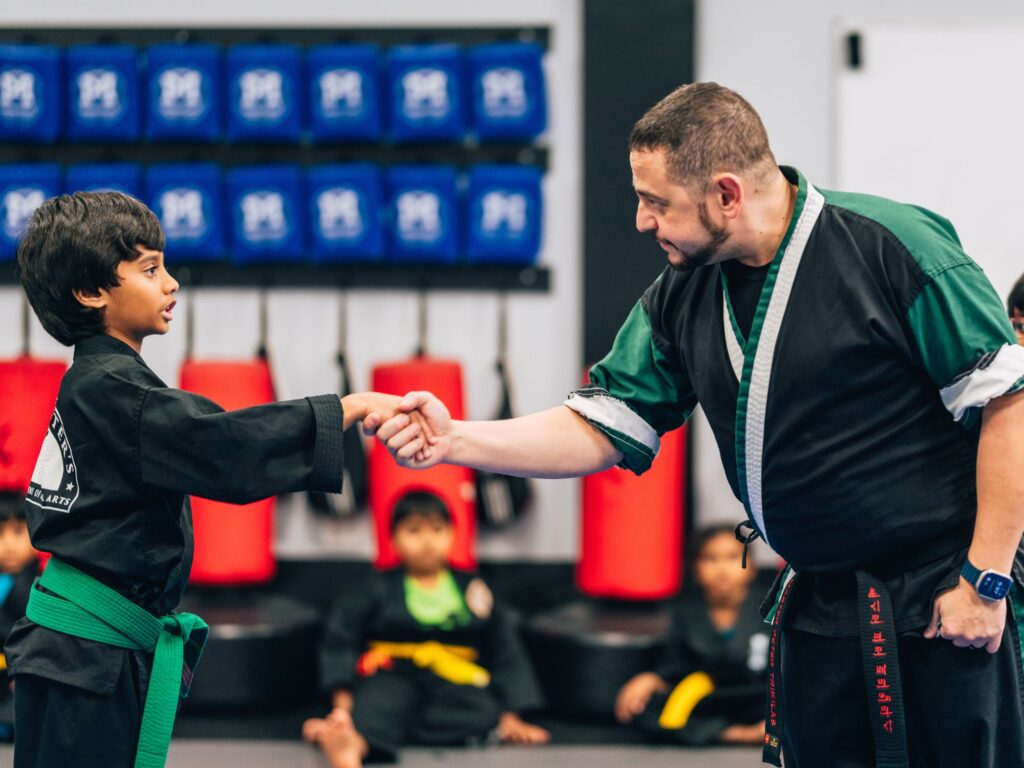
Master Peter shakes hands with a Green Belt student during a belt test.
Effort and Attitude Are Showcased
Children learn quickly that effort matters just as much as ability. Instructors demonstrate this by giving their best energy in every class, no matter what. Students see that attitude is a choice, not a reaction.
This example helps kids understand that leaders do not give up when things get tedious or difficult. Instead, they stay engaged and keep improving. Over time, students begin to approach their own training with the same mindset, helping them face challenges head-on in all areas of life.
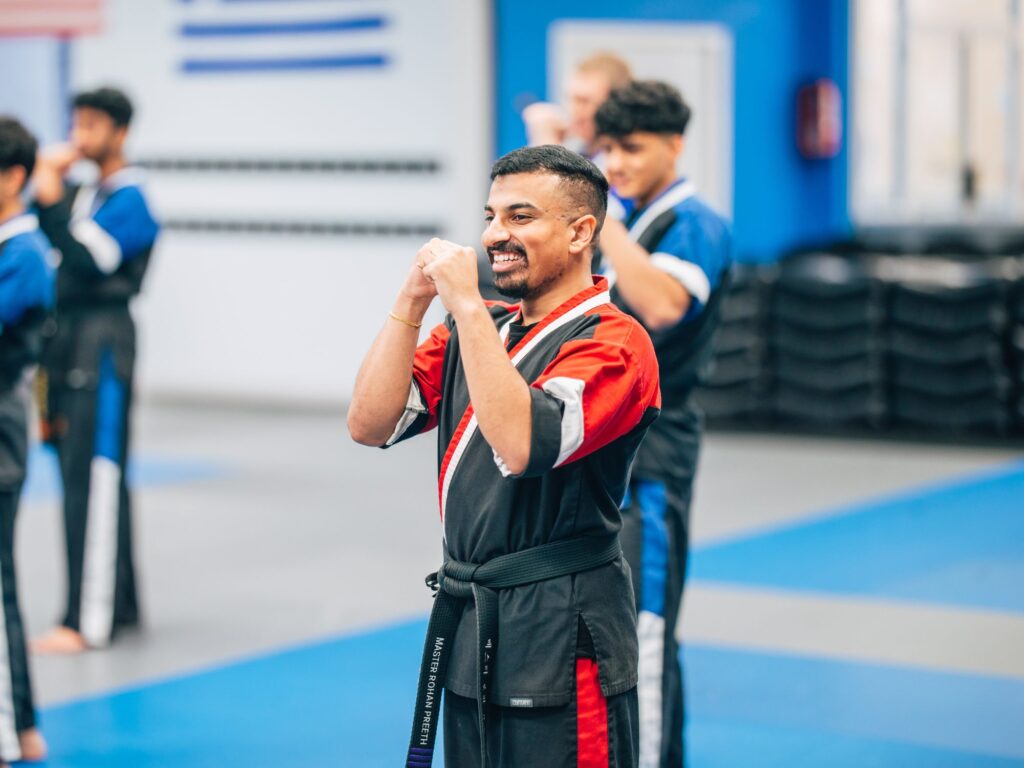
A group of instructors stand in guarding stance with big smiles.
The MPAMA Way
At Master Peter’s Academy of Martial Arts, leadership development is built into every class, interaction, and correction. The focus is not only on physical skill, but on shaping habits that carry into school, home, and future responsibilities.
The MPAMA Way emphasizes consistency in behavior, accountability, and encouragement among students. Instructors are intentional about modeling the kind of leadership they want to see, knowing that children learn far more from what they see than what they are told. This creates an environment where leadership grows naturally through experience.
Conclusion
Leadership does not begin when someone is given a title and put in charge of other people. It begins with daily choices, repeated behaviors, and the influence of strong role models. In martial arts training, children are given the opportunity to practice those choices in a supportive, motivating, and structured environment.
As students continue to train, they develop confidence not only in their skills, but in how they carry themselves and influence others. Over time, they begin to lead without even realizing it, simply by becoming the example they once followed.
Master Peter’s Academy of Martial Arts provides top-notch martial arts training for kids, teens, and adults in Dayton, South Brunswick, Monmouth Junction, Kendall Park, Princeton, Cranbury, East Windsor, Monroe, Jamesburg, Robbinsville, and Bordentown.