




In a fast-moving world, kids are often expected to react quickly. Without proper guidance, disagreements with friends, frustrations in school, or other common scenarios requiring quick reactions do not always lead to the best outcomes. But, what if children were taught to pause, think, and respond with confidence instead?
Martial arts gives kids that exact skill. Beyond kicks and punches, it teaches them how to steady their minds, manage their emotions, and make better choices in the moment. Here are three powerful ways martial arts helps children learn to calm their minds before reacting:
Focus Training
Every class begins with focus. Students are guided to stand still, control their breathing, and direct their attention to the present moment. It may not seem like much on the surface, but this simple habit builds a strong foundation for emotional control.
When kids practice slowing their breathing and focusing their thoughts, they develop a natural ability to pause before reacting, and turn that into a routine. Over time, this carries into everyday life. Students who feel frustrated or overwhelmed are more likely to take a breath and think before speaking or acting.
This skill does not just appear overnight. It is built through repetition, consistency, and guidance, all of which are part of every martial arts class.
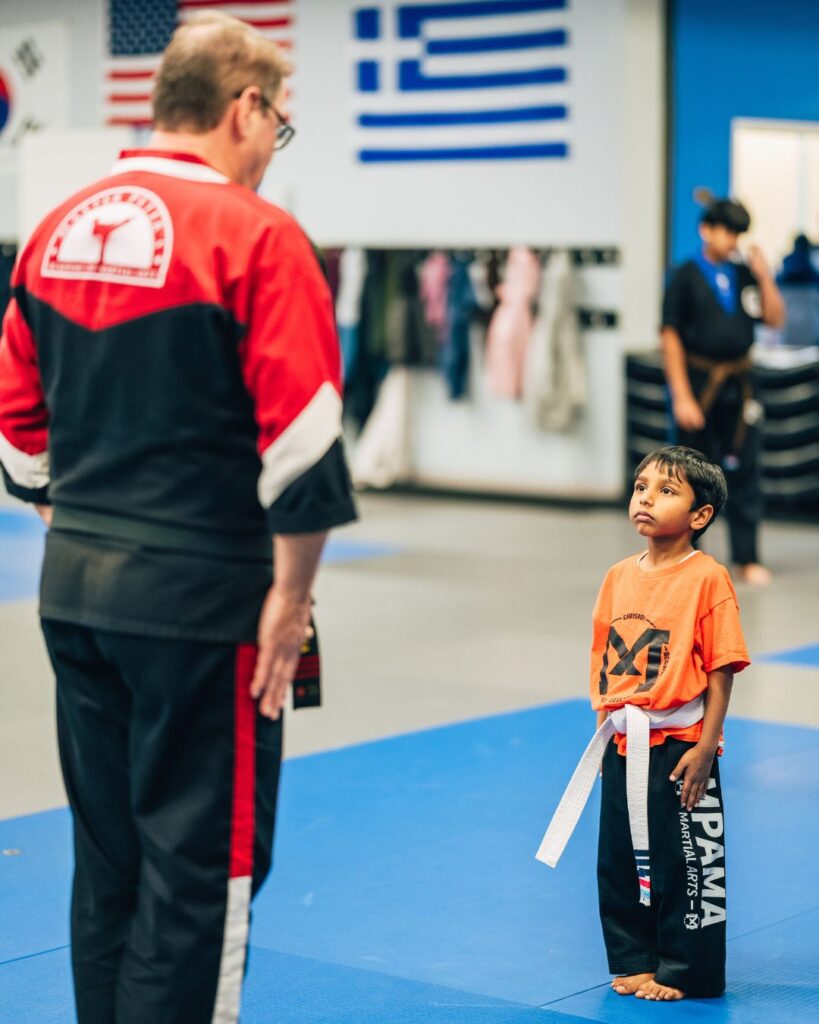
A White Belt student stands at attention, facing an instructor who’s demonstrating how to stand still.
Controlled Movement
Martial arts teaches kids that every movement has purpose. Strikes, blocks, and stances must be performed with control and precision, not just energy. Acting without control leads to mistakes, while calm and focused movement leads to success.
This lesson connects directly to emotional control. Kids begin to understand that reacting quickly without thinking can lead to undesirable results. Instead, they learn to slow down, stay aware, and choose their actions carefully.
As they improve physically, they also improve mentally. They become more patient, think about actions and consequences, and more aware of how their actions affect others.
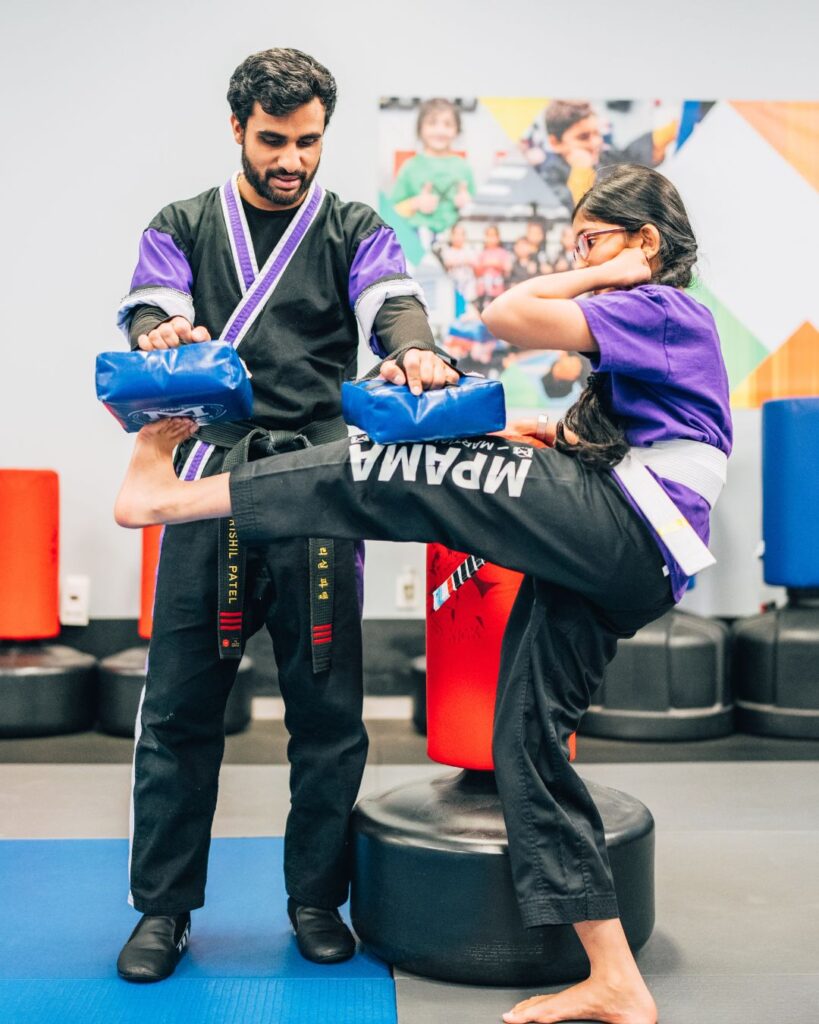
An instructor holds pads to teach a White Belt student how to do a proper front kick.
Reduced Emotional Reactivity
Many emotional reactions in children come from uncertainty or lack of confidence. When kids feel unsure, they may respond with frustration, anxiety, or withdrawal.
Martial arts helps change that reaction. As students learn new skills, earn belts, and overcome challenges, their confidence grows. They begin to trust themselves, and feel more certain about their abilities.
With this confidence comes a calmer mindset. Kids who feel secure are less likely to react unnecessarily. Instead of responding with strong emotions, they are able to stay composed and handle situations with clarity.
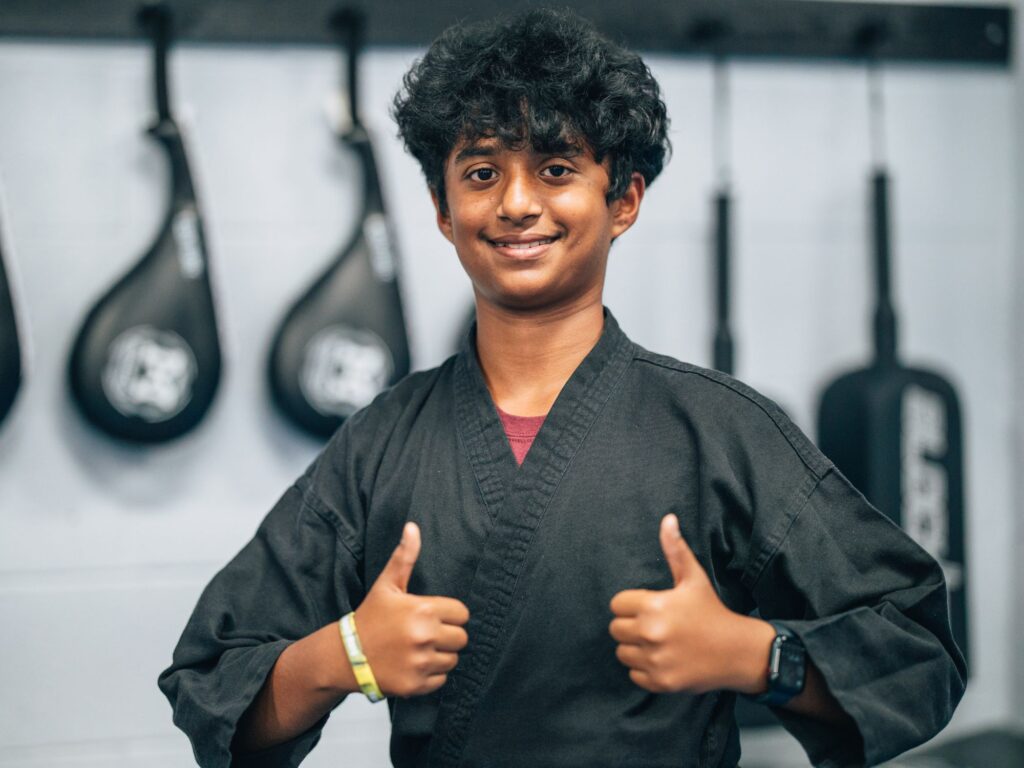
A student poses with 2 thumbs up and a smile during his Black Belt Test.
The MPAMA Way
At MPAMA, we go beyond just teaching techniques. Our focus is on developing strong character in every student. We actively teach children how to manage their emotions, stay focused under pressure, and make thoughtful decisions in the face of pressure.
Through consistent coaching, positive reinforcement, and intentional lessons, we help students apply what they learn on the mat to their everyday lives. Whether it’s in school, at home, or with friends, our students are encouraged to pause, think, and respond with confidence and respect.
Conclusion
Helping children learn how to pause before reacting is one of the most valuable skills they can develop. It improves their relationships, supports their success in school, and builds a strong sense of self-control that will benefit them for years to come.
Martial arts provides a clear path to developing this skill. With each class, kids grow not only stronger, but calmer, more focused, and more confident in how they handle challenges. And when a child learns to control their response, they take an important step toward becoming their very best self.
Master Peter’s Academy of Martial Arts provides top-notch martial arts training for kids, teens, and adults in Dayton, South Brunswick, Monmouth Junction, Kendall Park, Princeton, Cranbury, East Windsor, Monroe, Jamesburg, Robbinsville, and Bordentown.