




Motivation and productivity do not appear overnight. They are developed through daily choices, consistent routines, and clear expectations. When children build strong, healthy habits early on, they gain the ability to focus longer, follow through on responsibilities, and take ownership of their progress. These habits shape how they approach school, activities, and challenges, setting the tone for how they grow and succeed.
Here are three key ways martial arts classes help children build healthy habits that strengthen their motivation and increase their productivity in everyday life:
Focused Structure
Whether or not they realize it, children thrive on structure. When they know what is expected and understand the process for improvement, they feel more secure and more willing to put in effort. Martial arts classes are built around consistent routines. Each class follows a clear and familiar structure, helping to provide a comfortable atmosphere to develop skills purposefully.
This repetition does more than build technique. It trains the brain to focus, listen, and complete tasks in order. Students learn that effort leads to progress and that progress leads to advancement. They experience the reward of earning stripes and belts through consistent work.
Over time, this mindset transfers into school. Homework becomes simply another task that can be approached step by step. When children understand that small daily effort leads to bigger results, their motivation to get the work done increases naturally.
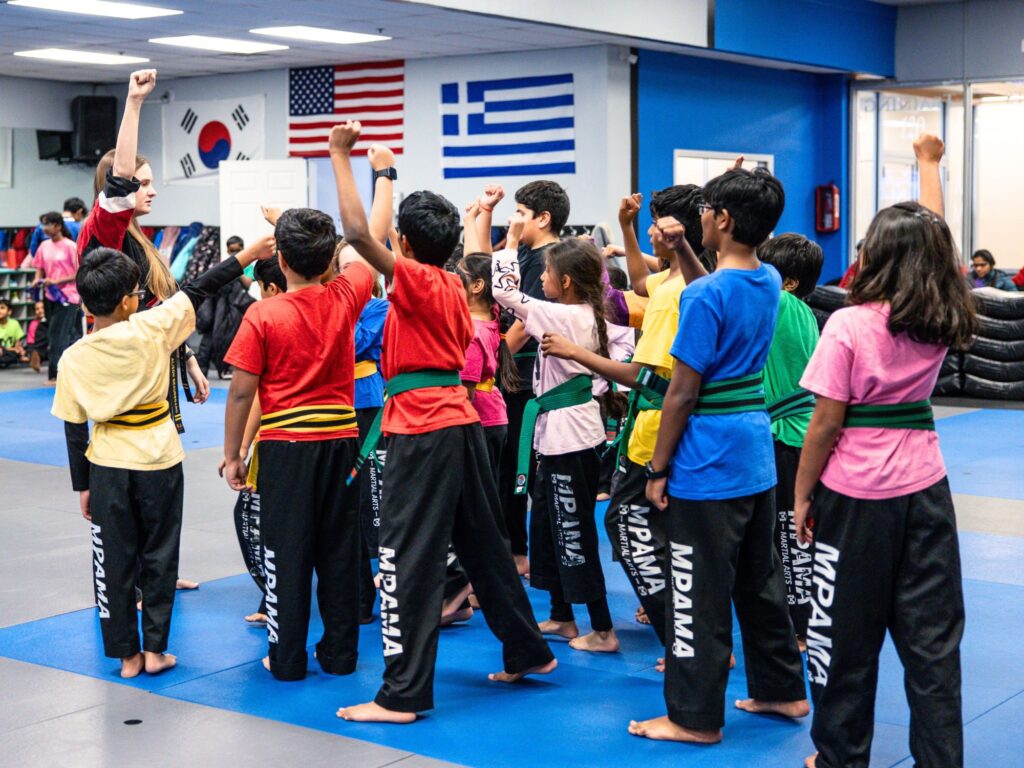
An instructor ends class with MPAMA’s signature “Train, Envision, Become!” while everyone raises a fist in the air.
Goal-Setting
Healthy habits are closely tied to goal setting. Without goals, effort feels random; Goals give a meaning to all that hard work.
In martial arts, children work toward clear milestones. Whether it’s mastering a new kick, improving their form, or preparing for a belt test, they always have something to aim for. They practice breaking big goals into smaller steps and track their improvement along the way.
This process strengthens internal motivation. Instead of relying on reminders or rewards from parents, students begin to take ownership of their progress. They want to practice. They want to improve. They begin to see themselves as capable and responsible for their own growth.
That sense of ownership directly impacts productivity. Confident, goal-driven children are more likely to take initiative to get school work done, practice instruments, complete chores, and manage their time effectively.

Black Belts are laid out on a table during a Black Belt Test to visually remind the testers what they are working hard to achieve.
Confidence Building
Healthy habits are not formed overnight, but are instead built through consistency. Martial arts teaches children that showing up matters. Effort matters. Respect matters.
Students quickly learn that improvement comes from regular practice. Even on days when they feel tired or frustrated, they learn to push through in a positive and controlled way. This builds mental resilience and self-discipline.
As discipline grows, so does their belief in their own abilities. Confident children are more willing to try new things and take on challenges. They become more productive because they are not afraid of effort or mistakes. They understand that growth is a process and that persistence always pays off.
When children experience this pattern again and again in class, it becomes part of their identity. They begin to see themselves as focused, capable, and hardworking individuals who can accomplish anything enough if they keep at it consistently.
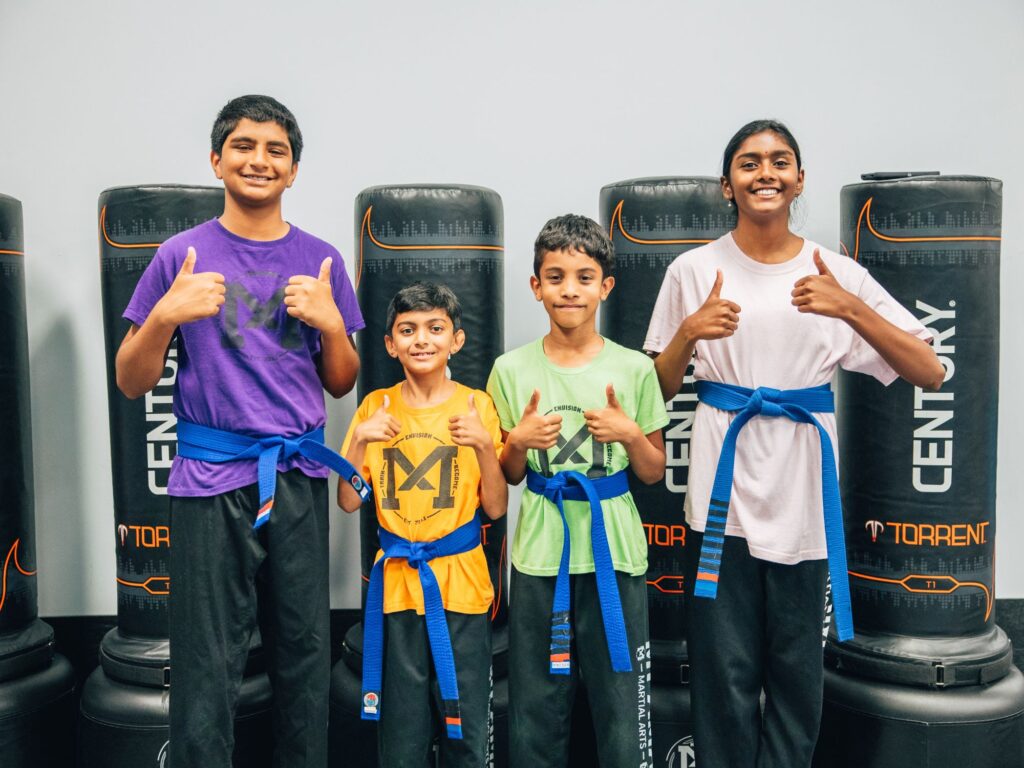
Four Blue Belt students pose together with 2 thumbs up and big smiles.
The MPAMA Way
At MPAMA, we take character development to the next level. In every class, students are guided to think beyond the physical techniques and become more aware of their mindset and choices.
This structure builds self-awareness and critical thinking. Instead of waiting for corrections, students learn to reflect and adjust in real time. They are not just practicing kicks and punches; They are practicing responsibility, focus, and personal accountability.
We intentionally reinforce these lessons every class. Our instructors model positive habits, set clear expectations, and recognize growth in character as much as growth in skill. We believe that martial arts should shape strong students and strong individuals both on and off the training floor.
Conclusion
When children develop healthy habits, motivation becomes natural and productivity becomes consistent. They learn how to focus, set goals, follow through, and take responsibility for their own growth. Martial arts provides a structured and supportive environment where these habits are practiced every single session.
The result is more than improved performance — It is a confident child who believes in their ability to improve, contribute, and succeed. When healthy habits are formed early, they create a foundation that supports a lifetime of achievement.
Master Peter’s Academy of Martial Arts provides top-notch martial arts training for kids, teens, and adults in Dayton, South Brunswick, Monmouth Junction, Kendall Park, Princeton, Cranbury, East Windsor, Monroe, Jamesburg, Robbinsville, and Bordentown.