





When parents enroll their children in martial arts, they often think about fitness, focus, and self defense. What many discover is something even more powerful. Martial arts classes create an environment where children learn how to build meaningful relationships rooted in respect.
Kids are constantly navigating social pressures, technology, and peer dynamics. Having a structured space that teaches respect in action can shape how they connect with others for life. Martial arts does not just teach technique, it teaches how to treat people.
Here are three key ways martial arts helps kids build strong relationships and friendships based on respect.
Respect for Mentors
Every martial arts class begins and ends with structure. Students bow, listen attentively, and follow clear expectations. Respect for instructors and teachers is modeled and practiced consistently.
When children learn to make eye contact, stand attentively, and listen carefully, they develop habits that transfer into everyday interactions. They begin to understand that respecting others means valuing their time, their words, and their leadership.
This foundation helps children build positive relationships with teachers at school, coaches in sports, and other adults in their lives. It also sets the tone for how they treat peers. When respect for educators is strong, respect within friendships becomes natural.
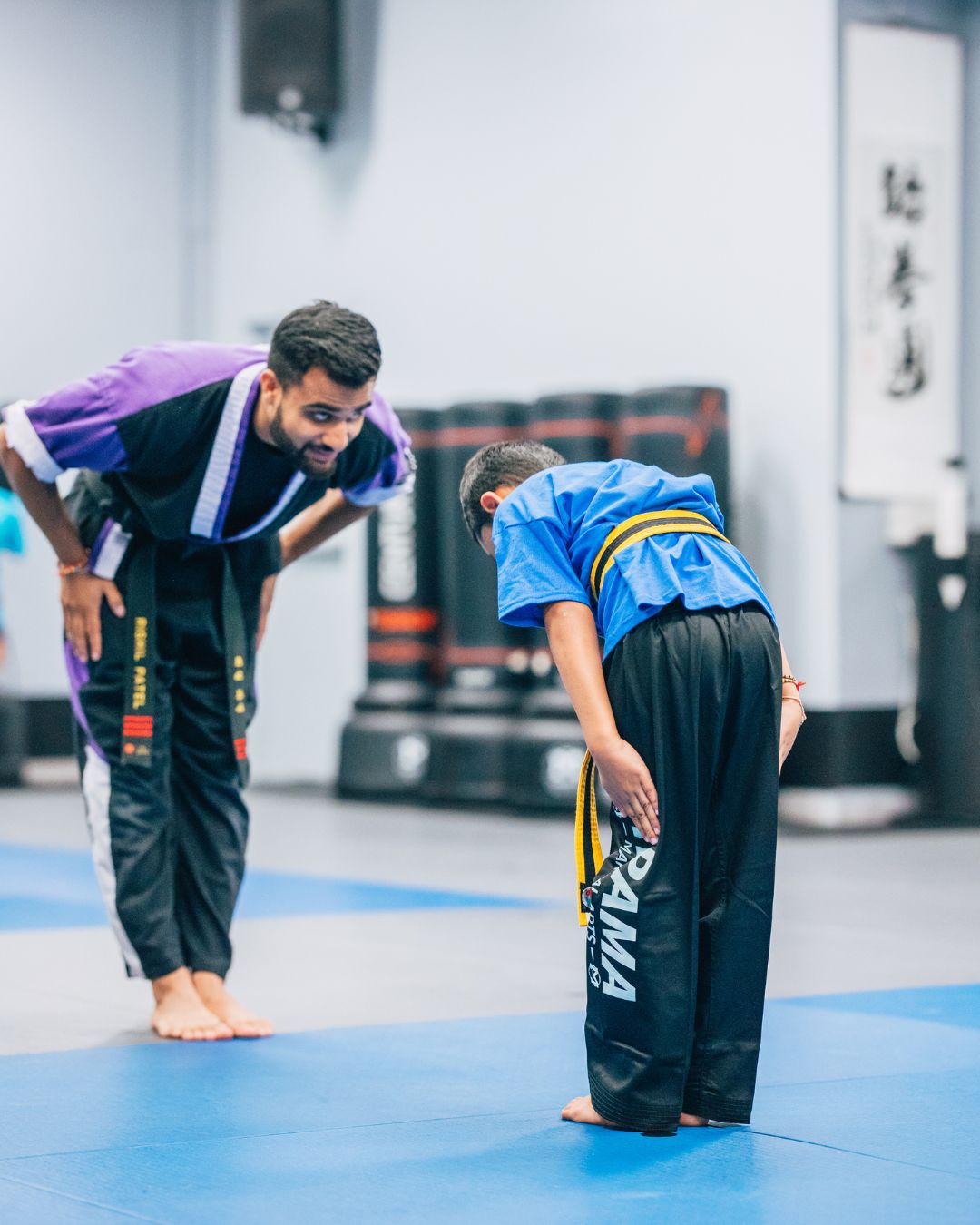
A Gold Belt student shares a bow with the instructor.
Practicing Teamwork
In martial arts, students train together. They hold pads for one another, practice drills in pairs and groups, and encourage teammates during challenging exercises. Progress is individual, but growth happens together.
Children quickly learn that improvement is not about overpowering someone else. It is about helping each other get better. When a student holds a pad correctly, their partner can practice safely and confidently. When they offer encouragement, they strengthen trust.
This shared responsibility teaches empathy and cooperation. Kids begin to see their classmates not as competition, but as teammates. Friendships built in this environment are grounded in mutual respect, shared goals, and positive communication.
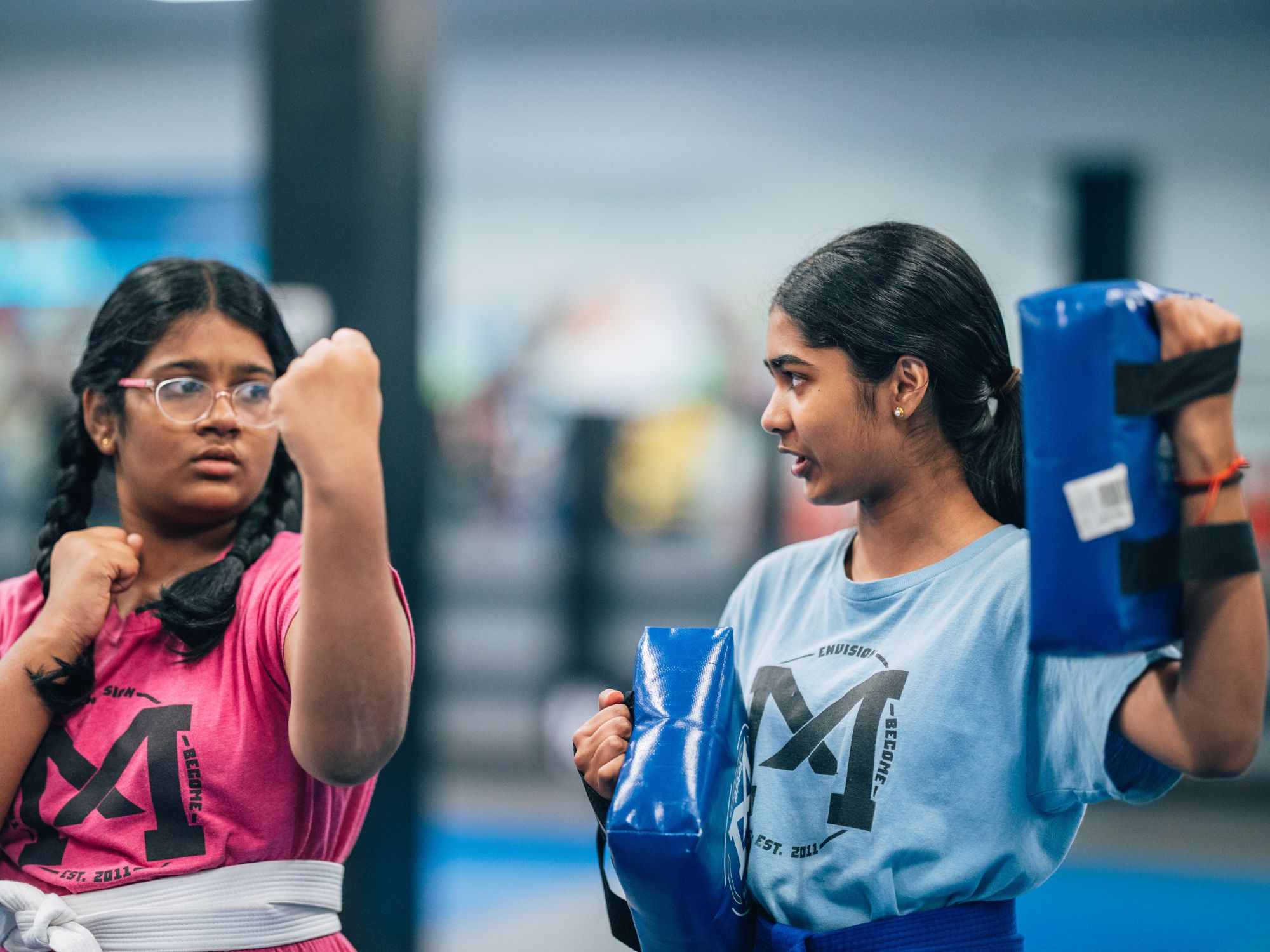
A Blue Belt student helps a White Belt student learn the proper technique for a move in their form.
Self-Respect
One of the most important lessons martial arts teaches is self-respect. Students learn to set goals and work hard to earn their own progress through discipline and effort. Heavy emphasis is placed on the idea that every action taken in class is meant to help themselves become better in any way.
As children gain confidence in their abilities, they begin to value themselves. This self respect changes how they approach friendships. They are less likely to tolerate negative behavior and more likely to choose friends who treat them well.
Confident children also tend to communicate more clearly, resolve conflicts more calmly, and stand up for themselves appropriately. When kids respect themselves, they naturally attract and build healthier relationships with others.
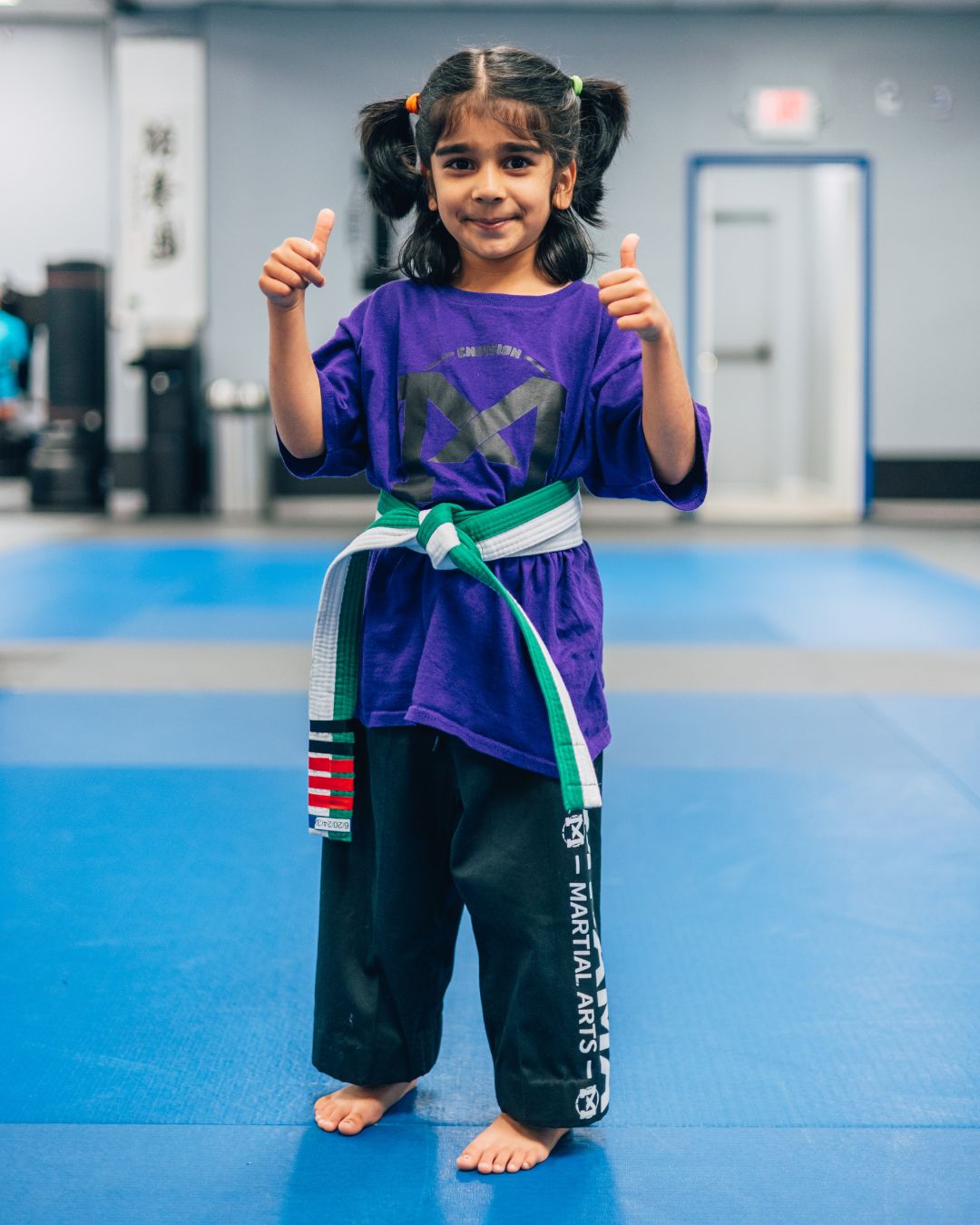
A Little Dragon Green Belt student poses with 2 thumbs up and a smile.
The MPAMA Way
At MPAMA, we believe character development is just as important as physical training. The MPAMA Way is our commitment to going above and beyond in teaching respect, discipline, and leadership.
We intentionally integrate character lessons into our curriculum. Students are reminded to ask themselves meaningful questions such as, “Where am I?,” “What am I doing?,” and “How can I get better?” These questions build self awareness and responsibility, which directly impact how they treat others.
Our instructors model respectful communication, positive correction, and encouragement. We celebrate effort, integrity, and kindness. We guide students not only to become better martial artists, but better friends, classmates, and leaders.
Conclusion
When children learn to respect their mentors, support their teammates, and value themselves, they develop relationship skills that extend far beyond the training floor. These lessons influence how they interact at school, at home, and throughout their future.
The habits formed in martial arts classes can shape a child’s character for life. Strong friendships built on mutual respect and trust are not accidental. They are developed through consistent guidance and practice.
At MPAMA, we are proud to help children grow into confident, respectful individuals who know how to build meaningful relationships. Because when respect leads the way, strong friendships naturally follow.