




Respect is often talked about as something we give to others, but it quietly shapes how we see ourselves as well. When children and adults practice respect in everyday situations, they are also building confidence, responsibility, and pride from the inside out. Respect is not about being perfect or never making mistakes; It is about choosing to treat people with care an consideration, even when it takes effort.
At MPAMA, we believe respect is a skill that can be learned, practiced, and strengthened over time with the proper training. When students show respect consistently, they begin to trust themselves more. They feel capable, grounded, and confident in who they are. Below are three important ways that showing respect for others helps build self respect at home, in school, and on the training floor.
At Home
Home is where respect often begins. When children show respect to parents, siblings, and family members, they learn how their actions affect the people close to them. Simple habits like listening without interrupting, using polite words, and following directions also help children develop skills like self control and accountability.
When a child chooses respect at home, they start to see themselves as someone who can be trusted. Parents notice when a child helps without being asked or responds calmly instead of arguing. Those moments matter. They send a clear message to the child that their behavior makes a positive difference in everyone’s lives.
Over time, this builds self respect. Children who practice respect at home feel proud of how they handle challenges. They learn that doing the right thing is not simply about avoiding trouble, but about being the kind of person they want to be. They carry that confidence with them into every other area of life.
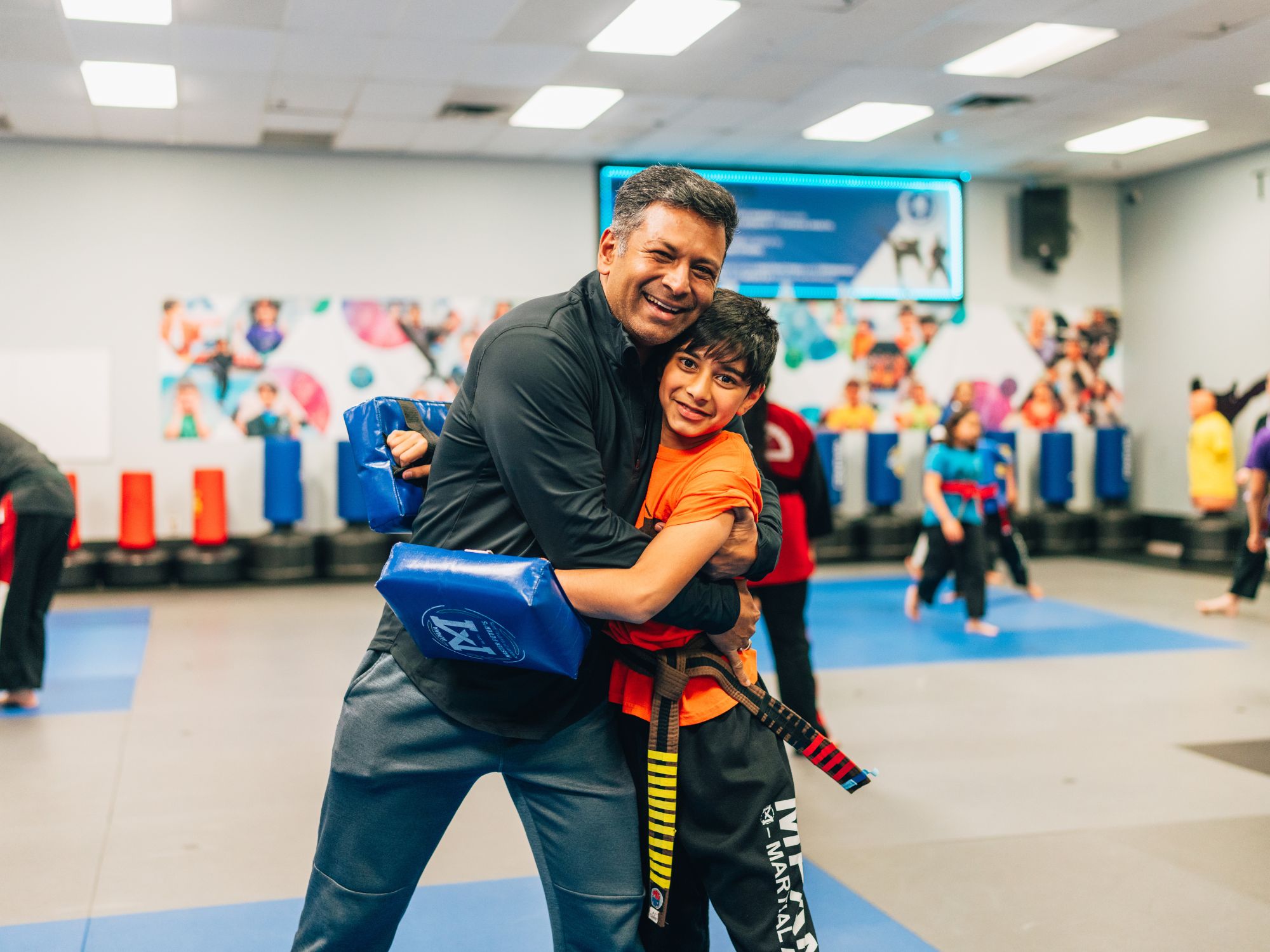
A father and son share a hug during a Parents’ Day class at MPAMA.
In School
School is full of opportunities to practice respect. Respecting teachers, classmates, and the learning environment helps students feel more connected and capable. When students listen, raise their hand, and follow classroom rules, they are showing that they value their education, their learning environment, and themselves.
Respectful behavior in school helps students build meaningful connections with their teachers. When students consistently show effort and courtesy, they create an environment where encouragement and support naturally follow. This ongoing positivity strengthens their confidence, helps them recognize their abilities, and empowers them to take pride in their own growth and progress.
Respecting classmates plays an important role in building a supportive school experience. When students treat others with kindness, patience, and consideration, they develop empathy and strong social awareness. These skills help them build positive friendships and interact confidently in group settings. As students see themselves contributing to a welcoming environment, their self respect continues to grow naturally.
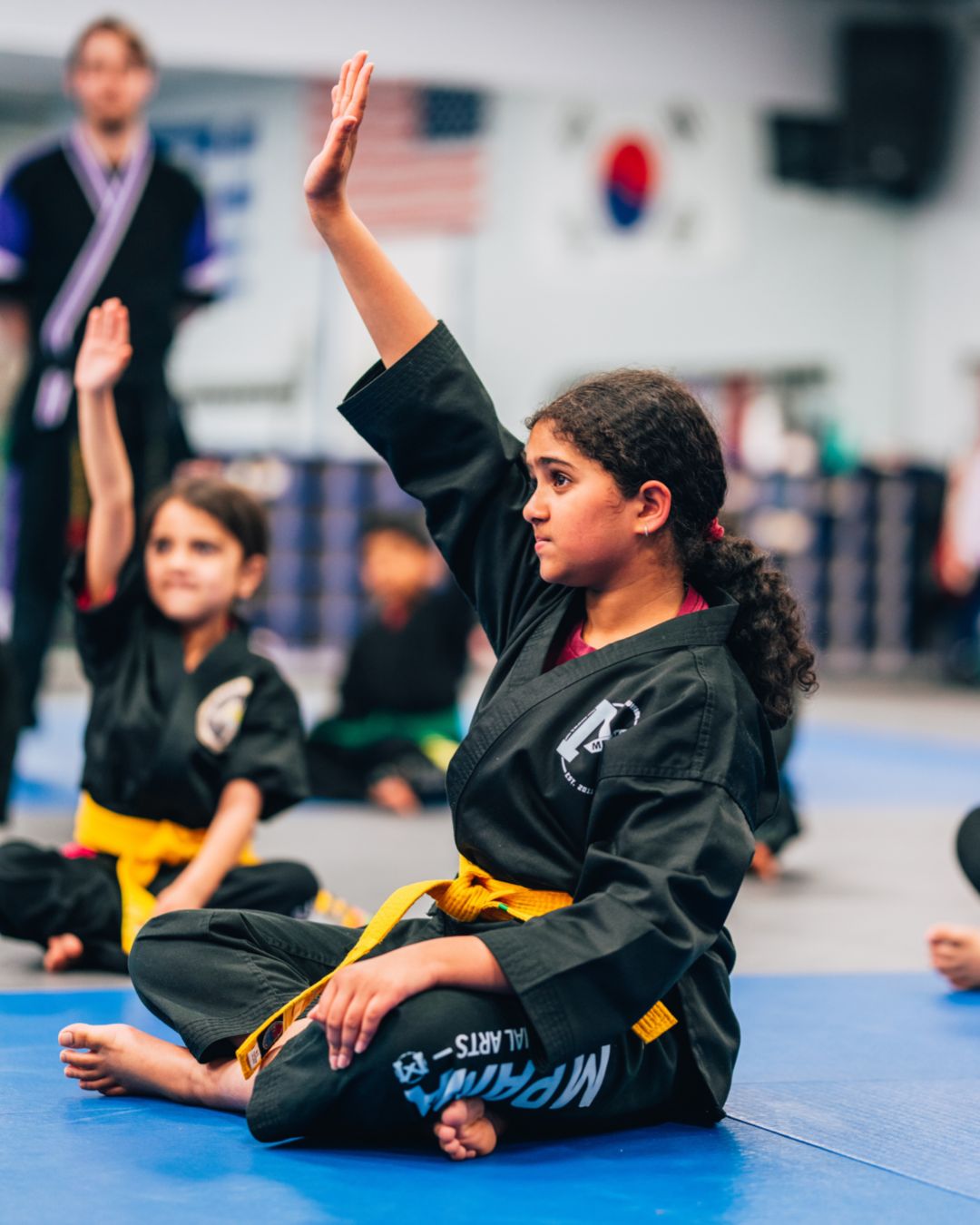
Gold Belt students quietly and politely raise their hands to answer a question.
On the Training Floor
The training floor is a powerful place to practice respect. Bowing, listening to instructors, supporting teammates, and following rules are not just traditions—They are habits that shape character. When students show respect in class, they are learning discipline and self control.
Martial arts training requires both focus and effort. Students who respect the process, even when it feels difficult, develop resilience as well. They learn that progress comes from consistency and commitment, so each class becomes an opportunity to prove to themselves that they can stay disciplined and positive.
Respecting training partners is another key piece. Encouraging others, practicing safely, and showing good sportsmanship builds a strong sense of community and camaraderie. Students feel proud when they contribute to a positive environment. That pride strengthens their self respect and motivation to keep improving.
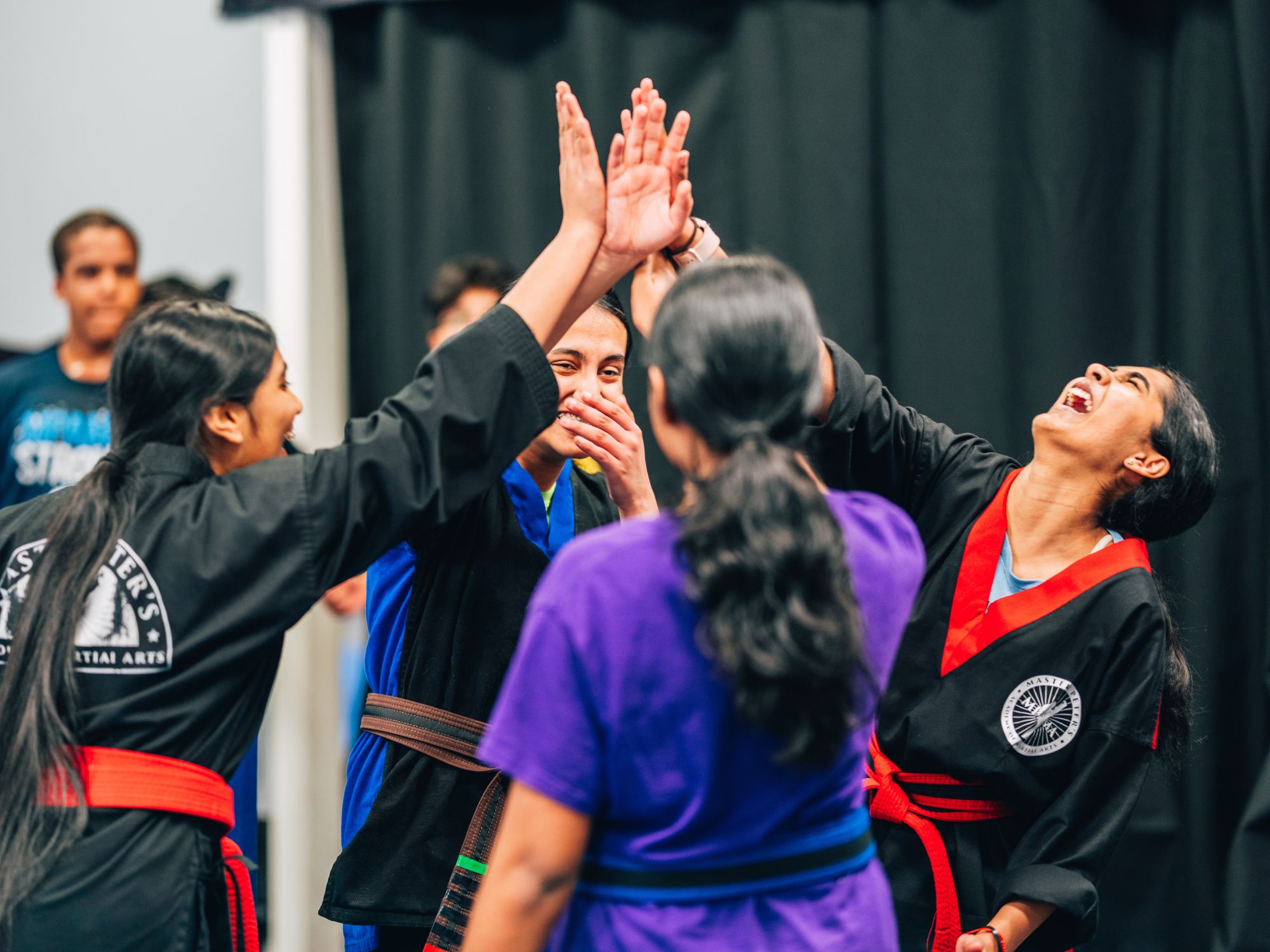
A team of Teen/Adult MMA students share a group high-5 and a laugh after completing a challenge.
The MPAMA Way
At MPAMA, respect is not just a word we talk about; It is part of the MPAMA Way. We go above and beyond to teach character alongside physical skills. Our instructors model respect in every class, and we recognize students who live it both on and off the mat.
We believe character development should be intentional. Through consistent expectations, positive reinforcement, and meaningful conversations, we help students understand why respect matters. Our goal is not just to create skilled martial artists, but confident individuals who carry strong values into their daily lives.
Conclusion
Respect for others is one of the most powerful tools for building respect for oneself. When students practice respect at home, in school, and on the training floor, they develop confidence, responsibility, and pride in who they are becoming.
These lessons do not happen overnight, but they do last a lifetime. Each respectful choice helps shape a stronger, more confident version of ourselves. At MPAMA, we are proud to guide our students on that journey, one respectful action at a time.