






As adults, we understand that life doesn’t always go according to plan. But for kids, that can be a tough lesson to learn. Whether it’s adjusting to a new classroom, navigating an unfamiliar social situation, or facing an unexpected challenge, kids are constantly encountering changes that require them to think and act differently. But how can we prepare children to handle these situations with confidence instead of uncertainty?
One of the most valuable skills children can develop is adaptability: the ability to recognize changes in the environment, react thoughtfully, and respond effectively. Fortunately, martial arts provides a unique opportunity for kids to practice this skill through structured challenges, physical activities, and real-time decision-making. By learning how to recognize, react, and respond, children build the awareness and confidence necessary to succeed in an ever-changing world.
Recognizing Changes
Adapting to change starts with recognizing the change. Martial arts training encourages students to become more observant of their surroundings, helping them identify when change occurs, recognize patterns, and pay attention to important details. Whether they’re following an instructor’s directions, observing a partner’s movements, or learning a new technique, students practice staying mentally engaged with their environment.
As a result, students develop heightened awareness that extends beyond the training floor. Children who practice recognizing changes become better equipped to notice social cues, understand new expectations, and identify when a situation requires a different approach. By developing strong observational skills, kids learn that awareness is the first step toward making smart, confident decisions.
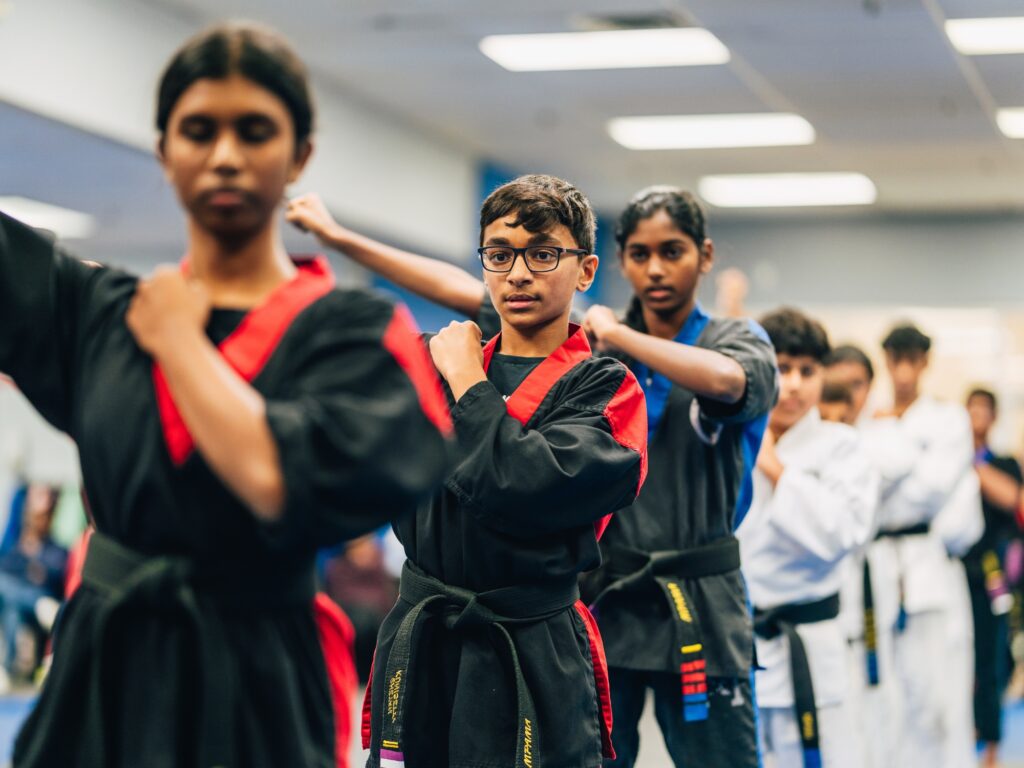
A group of Black Belt testers line up to prepare to perform Form 11.
Reacting to Change
Recognizing a change is important, but how children react to that change can make all the difference. It’s natural for kids to feel frustrated, nervous, or overwhelmed when something unexpected happens. Martial arts teaches students to manage these instinctual reactions by developing focus, emotional regulation, and self-control.
During training, students frequently encounter situations that require quick adjustments, like the instructions of a drill changing or a partner using a move in an unexpected way. Rather than reacting impulsively or giving up, students are encouraged to remain focused, evaluate what happened in the moment, and adjust their approach. Over time, these experiences help children understand that they cannot always control what happens around them, but they can learn to control how they react.
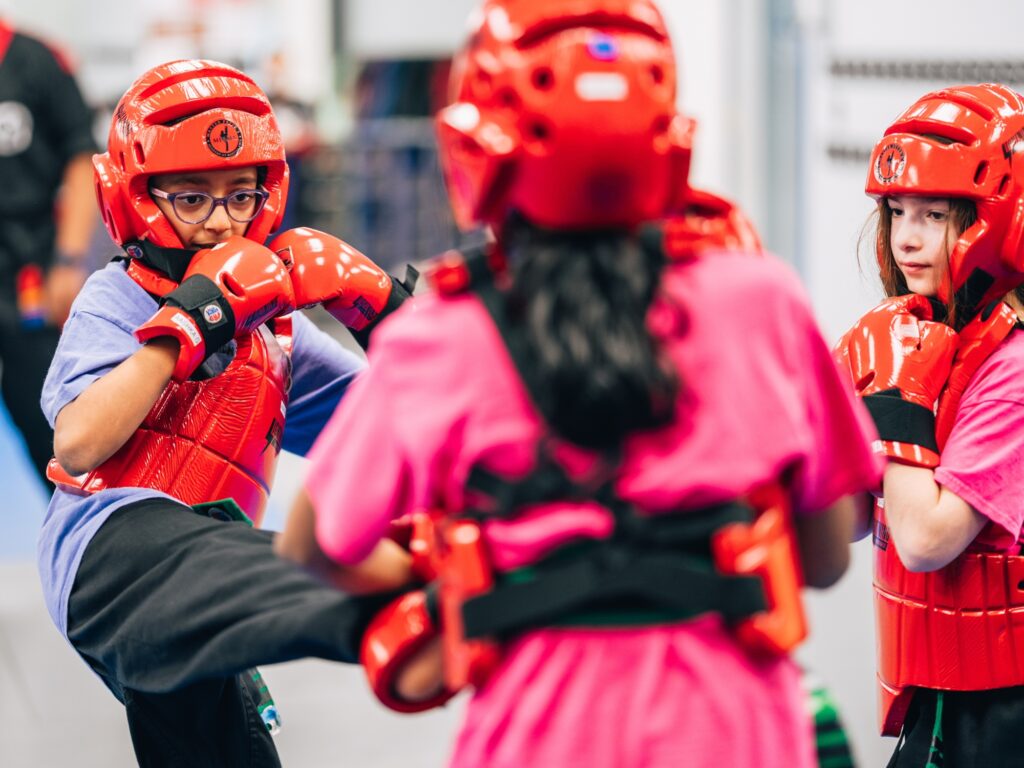
A group of Green Belts wear full gear during a sparring drill.
Responding to Change
Once children recognize a change and manage their initial reaction, the next step is deciding how to respond. Martial arts gives children the chance to practice making decisions, solving problems, and adjusting their actions based on the situation in front of them. These experiences teach kids to think independently while remaining flexible in their approach.
For example, during partner drills or sparring exercises, students have to evaluate their partner’s movements and determine which techniques are most appropriate. The plan that worked moments earlier may no longer be effective, requiring them to adjust their timing, positioning, or strategy. This process reinforces an important life lesson: success isn’t always about having the perfect plan, but about knowing how to adjust when circumstances change. Whether they’re facing an academic challenge, working through social rifts, or trying something unfamiliar, children become more confident in their ability to make thoughtful decisions and take appropriate action.
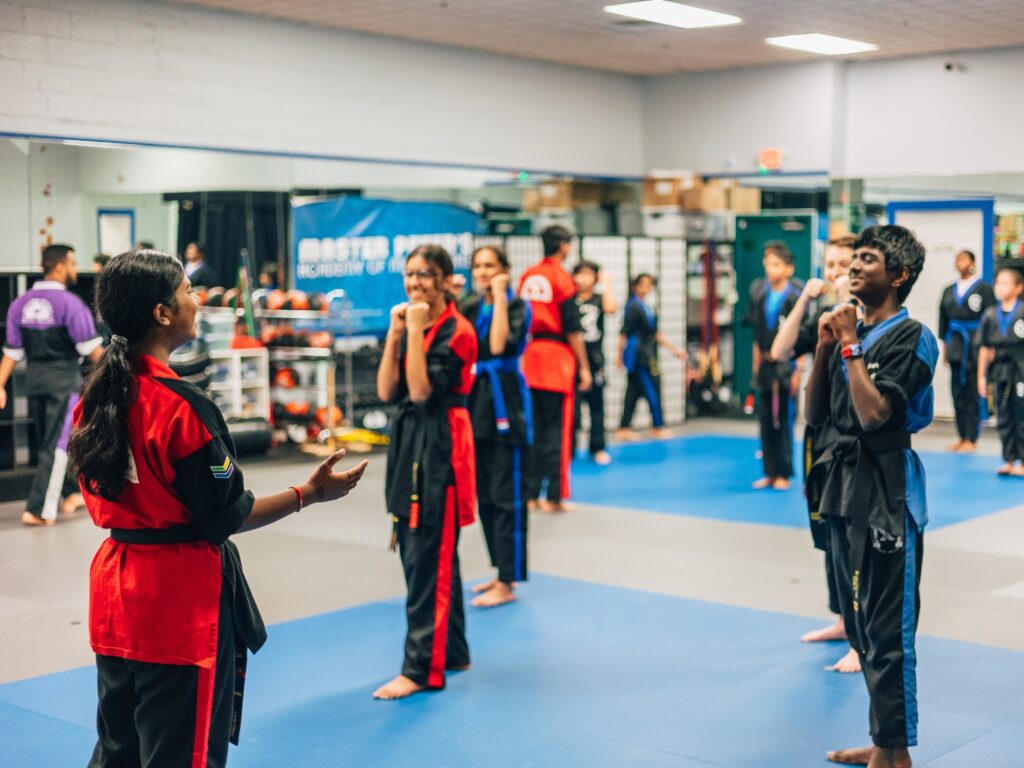
A Leadership Team member practices public speaking in front of a group of classmates.
The MPAMA Way: Preparing Kids for Real-Life Challenges
At Master Peter’s Academy of Martial Arts (MPAMA), we believe that developing adaptability requires more than simply learning martial arts techniques. Our instructors intentionally create opportunities for students to practice recognizing, reacting, and responding through engaging drills, partner activities, and age-appropriate challenges.
We place emphasis not only on what students do, but also how they think, make decisions, and manage themselves when something unexpected occurs. By providing constructive feedback, encouraging independent problem-solving, and reinforcing positive responses, we help students understand how the lessons they learn in class can be applied to everyday life. Our goal is to develop confident, adaptable individuals who are prepared to approach challenges with awareness, composure, and determination.
Conclusion: Raising Kids Who Are Ready for Change
Change is an unavoidable part of growing up, and children won’t always have the opportunity to prepare for every challenge they encounter. However, they can develop the skills necessary to approach unfamiliar situations with greater confidence and control. Through martial arts, kids learn to recognize what’s happening around them, manage their reactions, and make thoughtful decisions about what to do next.
The goal isn’t to raise children who never deal with change; it’s to raise children who know how to handle themselves in the face of unexpected circumstances. When kids develop the ability to recognize, react, and respond effectively, they become better prepared to take on new experiences, overcome obstacles, and grow into capable, resilient individuals. They may not have control over how the world changes around them, the most important thing children can learn is to control how they respond.
Master Peter’s Academy of Martial Arts provides top-notch martial arts training for kids, teens, and adults in Dayton, South Brunswick, Monmouth Junction, Kendall Park, Princeton, Cranbury, East Windsor, Monroe, Jamesburg, Robbinsville, and Bordentown.