






A child’s full attention can be an extremely competitive market in today’s world. Between school, activities, friends, screens, and the constant stream of information around them, staying focused on what is happening right now can be difficult. That is why mindfulness is such an important skill for children to develop.
Mindfulness is the ability to be present, aware, and intentional. It helps kids recognize what they are thinking and feeling, control their reactions, and give their full attention to the task in front of them. While mindfulness can be practiced in many ways, martial arts gives children the opportunity to develop the skill through consistent, active practice. Here are three ways martial arts training helps students become more mindful and prepares them for success:
Focusing on the Present
During martial arts training, students need to pay attention to what they are doing in that present moment at all times. They listen to instructions, watch demonstrations, practice techniques, and make adjustments based on feedback from instructors and peers. If their attention wanders, they risk missing an important detail.
Over time, this teaches students how to direct their attention instead of allowing distractions to take it over. A child who learns how to concentrate during class can use that same ability while listening to a teacher, completing homework, playing for their sports team, or having an important conversation.
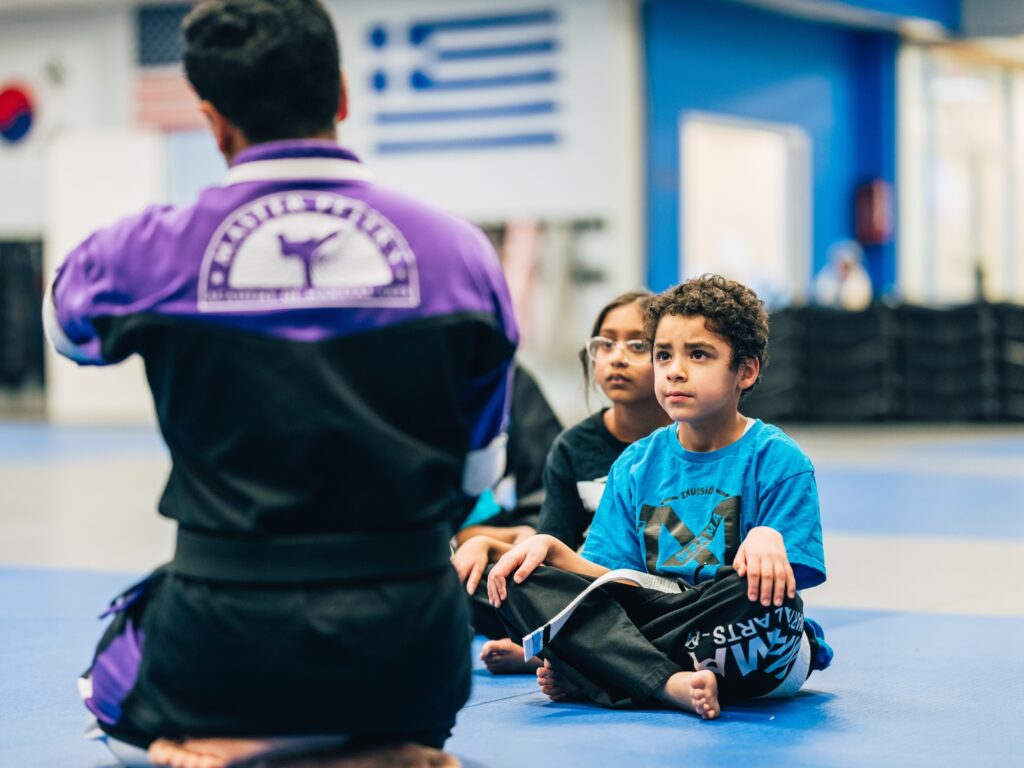
A class of White Belt students sits and focuses on the instructor.
Recognizing and Managing Emotions
Mindfulness is not just about concentration. It also means becoming more aware of your thoughts and emotions before deciding how to respond. Luckily, martial arts gives students regular opportunities to practice this skill in a positive and structured environment.
Students experience a wide range of emotions while learning new techniques in class, including frustration, anxiety, fear, but also accomplishment, satisfaction, and confidence. Training in martial arts teaches them that experiencing those emotions does not mean they have to react impulsively. They can recognize what they are feeling, regain control, and decide what the most productive next step is. That emotional awareness can help children handle challenges more effectively at school, at home, and with their peers.
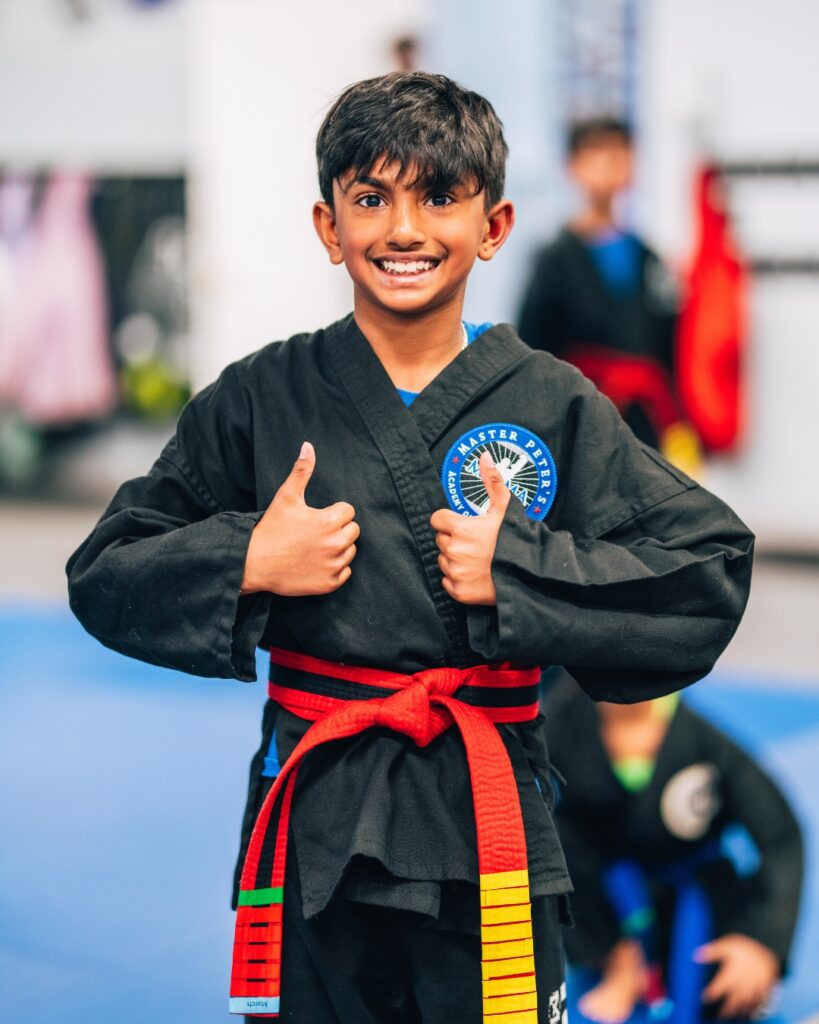
A Red Belt student poses with two thumbs up and a beaming smile.
Being Intentional With Actions
Martial arts encourages students to always think about how they move, speak, practice, and interact with others. Techniques must be performed with control. Partners must be treated with respect. Instructions need to be followed carefully. Progress requires students to recognize what they need to improve, and then make a deliberate effort to work on it.
Over time, this expectation develops an important habit: thinking before acting. Instead of simply reacting to whatever happens around them, students learn to make purposeful choices. As children get older and face more responsibility, that ability becomes increasingly valuable. Success relies on making good decisions consistently, even when those decisions require patience, discipline, or extra effort.
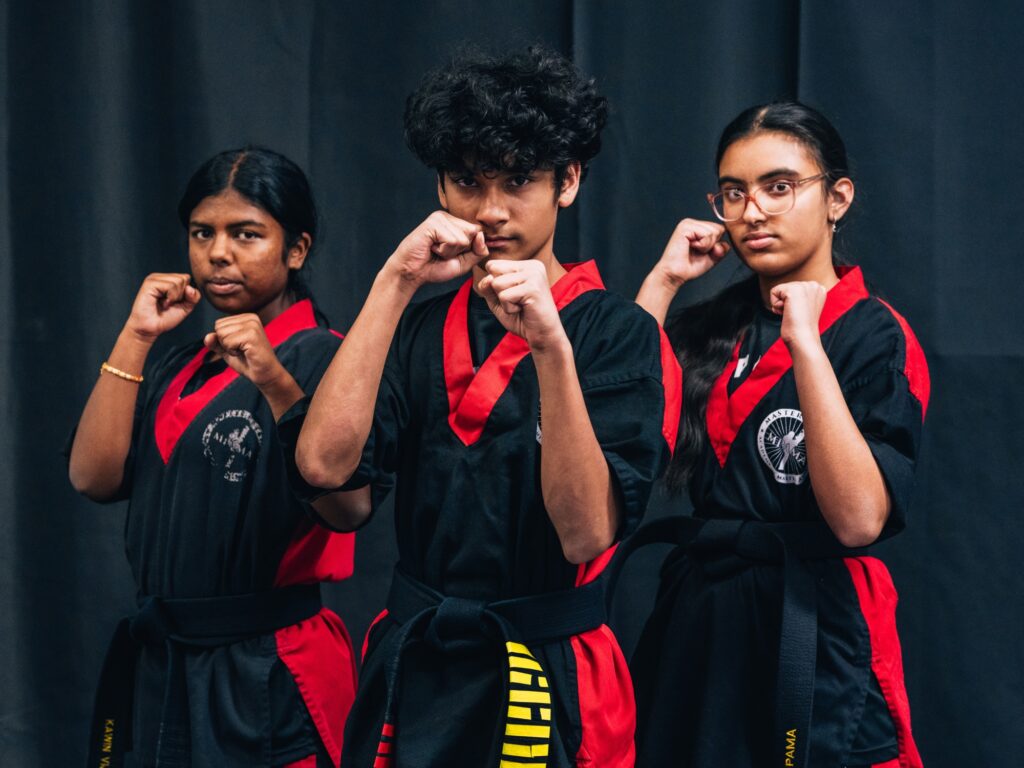
A trio of Leadership Team members stand with serious faces and guards up.
The MPAMA Way
At MPAMA, we believe character development deserves the same deliberate attention as physical martial arts skills. We go beyond simply asking students to focus during class. We help them understand why mindfulness matters and how they can apply it to their everyday lives. Students are encouraged to become aware of their choices, attitudes, effort, and interactions with others, even from an early age.
The MPAMA Way is about helping students take what they learn in martial arts and use it wherever they go. Mindfulness becomes more than paying attention during a lesson; it becomes a character trait that supports better decision-making, stronger relationships, greater self-control, and continued personal growth. Our goal is not simply to develop better martial artists, it is to develop capable, confident young people who understand that their actions matter.
Building Skills That Last
Children will encounter distractions, difficult emotions, mistakes, pressure, and unexpected challenges throughout their lives. We cannot remove nor protect them from every obstacle they will face, but we can help give them the skills to respond to those situations effectively and productively.
Martial arts teaches kids to notice what is happening, stay focused on what they can control, and choose their next action with intention. Those habits can influence how they learn, communicate, solve problems, pursue goals, and respond when things do not go according to plan. When children learn to be present and purposeful today, they develop skills that help them become more successful, responsible, and confident tomorrow.