






Every child experiences big emotions. Excitement, frustration, pride, disappointment, and everything in between can show up quickly and can often be overwhelming for children. The challenge is not avoiding these feelings, but learning how to understand and manage them. Martial arts provides a structured and supportive environment where children can develop emotional balance in a healthy and empowering way.
Pause Before Reacting
One of the first lessons children begin to understand in martial arts is the importance of control. In class, students are constantly reminded to listen, focus, and respond with intention. Those can all be pretty tough without control over the mind and body, which is why martial arts students practice them each class.
This carries over into emotionally-charged situations. Instead of reacting immediately when they feel upset or frustrated, kids begin to pause. They learn to take a breath, think about what is happening, and choose a better response. Over time, this builds a habit of self-control that helps them handle challenges both inside and outside of class.
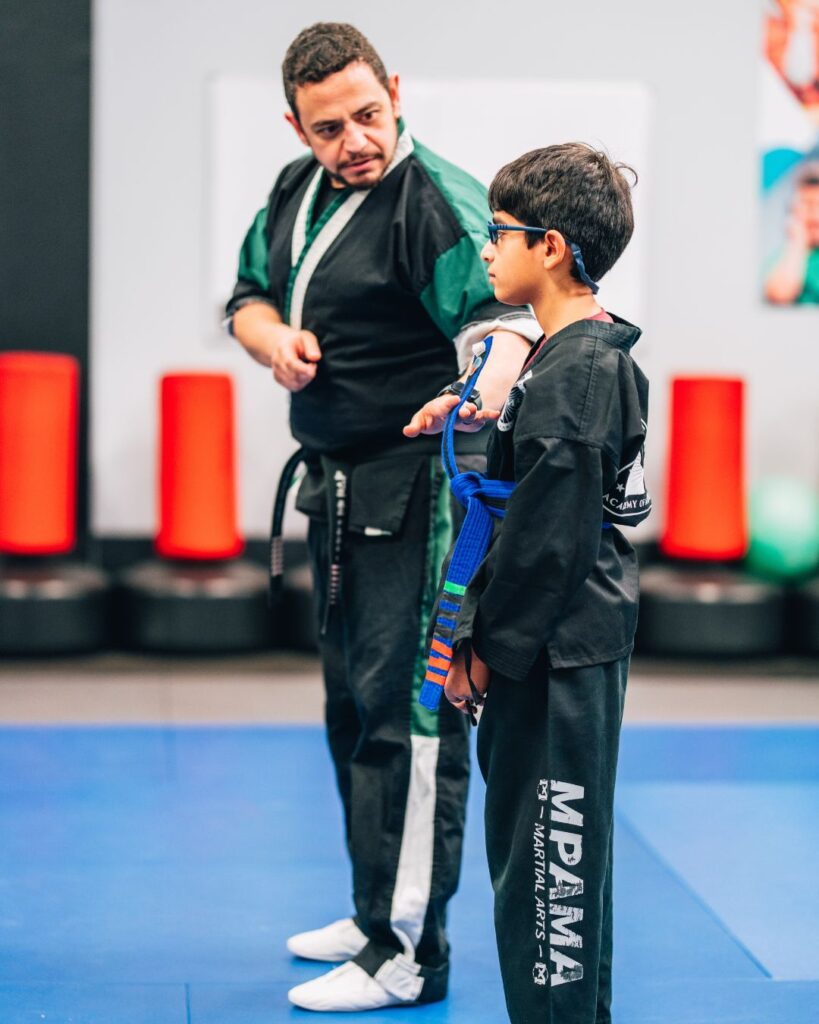
A Blue Belt student stands with Master Peter during a speech at his Belt Test.
Emotional Awareness
Martial arts encourages kids to stay present. Instructors guide students to think about where they are, what they are doing, and how they can improve. This level of awareness helps children become more in tune with their thoughts and feelings.
As they train, kids start to recognize when they feel nervous before trying something new or frustrated when a technique does not come easily. Instead of ignoring these emotions, they learn to identify them and deal with them responsibly. This awareness is a powerful step toward emotional balance because it gives children the ability to understand what they are feeling, why they feel that way, and what they can do about it.
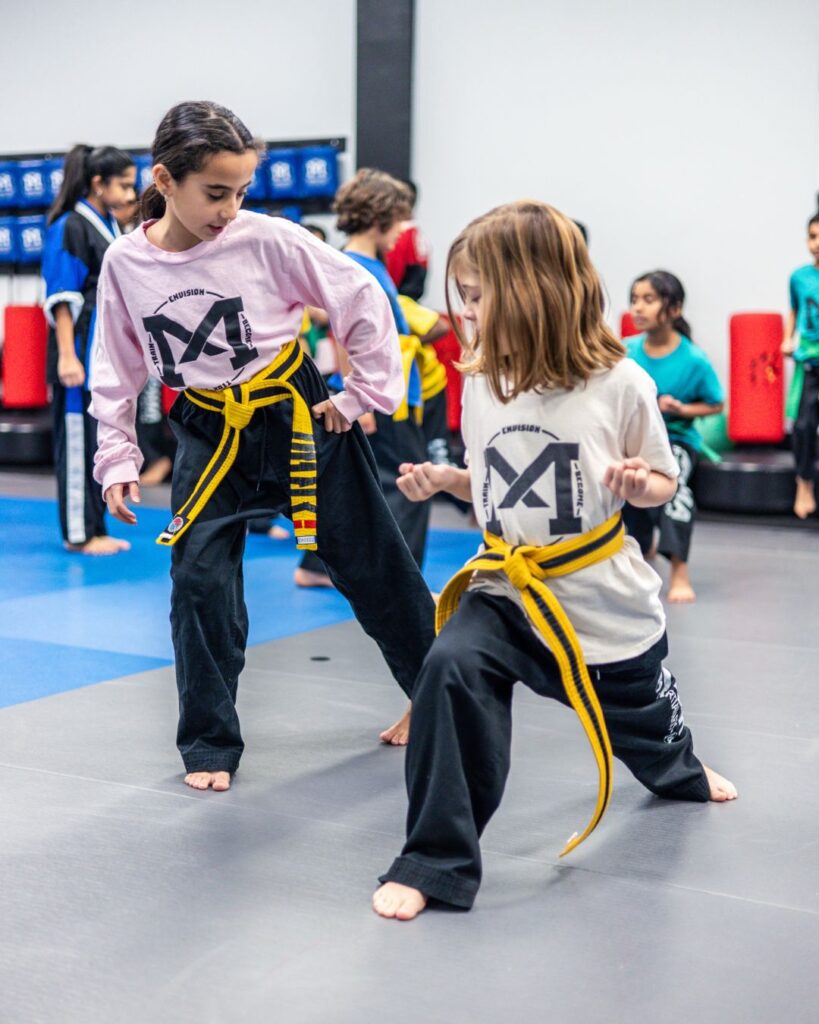
A Low Gold belt student helps her fellow Low Gold belt partner perfect her front stance.
Developing Confidence
Progress in martial arts is earned through consistent effort. As children improve their skills, earn stripes, and advance in rank, they begin to feel a sense of accomplishment. This confidence helps stabilize their emotions.
When kids believe in their ability to grow and improve, they are less likely to feel overwhelmed by setbacks. They start to see challenges as part of the process rather than something to fear. By seeing things through a confident perspective, this mindset helps them stay more balanced, even when things do not go their way.
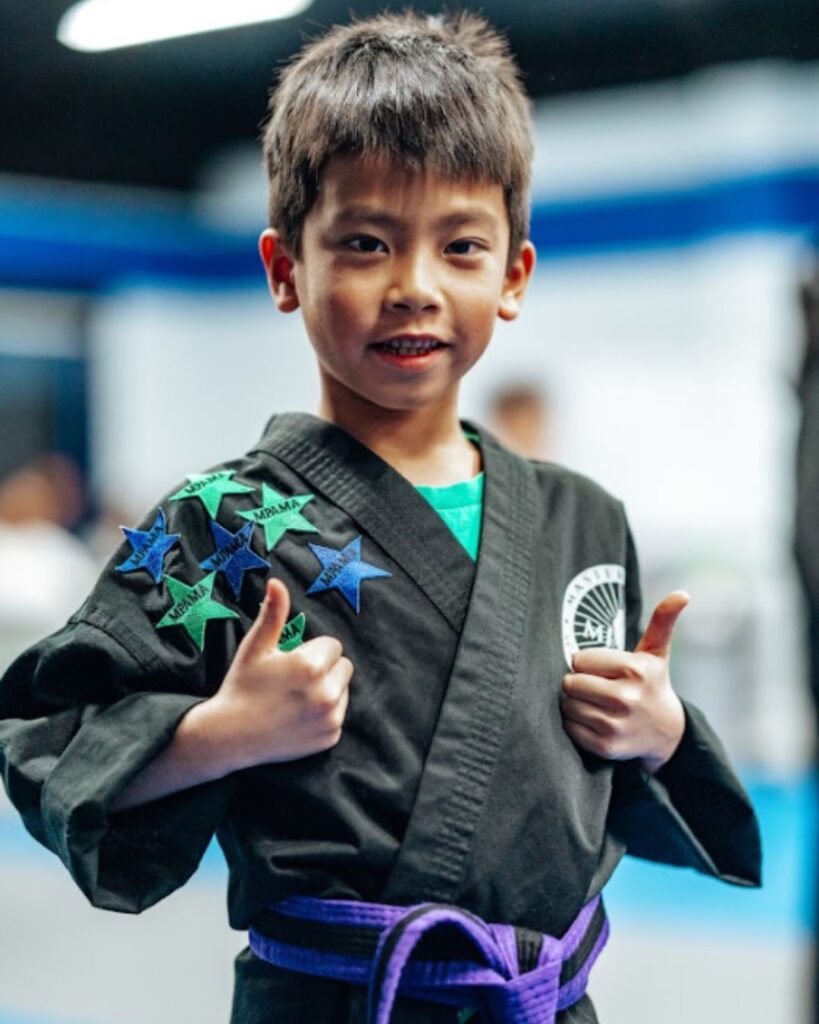
A Low Purple belt poses with a smile and two thumbs up during his Belt Test.
The MPAMA Way
At MPAMA, we go beyond physical training by making character development a central part of every class. Students are encouraged to stay present, reflect on their actions, and take ownership of their progress. This helps them build a strong sense of self-awareness while developing the discipline needed to keep improving.
Our instructors focus on teaching life skills alongside martial arts techniques. Each class creates opportunities for students to practice patience, respect, focus, and emotional control in real time. With consistent support and guidance, these lessons become habits that positively impact how they handle challenges in everyday life.
Conclusion
Emotional balance is not something children are simply born with. It is a skill that can be developed with the right guidance and environment. Martial arts provides that foundation by teaching kids how to pause, understand their emotions, and build confidence through effort.
As children grow in their training, they also grow in their ability to handle life’s ups and downs with greater calm and clarity. These lessons stay with them far beyond the mat, helping them become more confident, focused, and emotionally strong individuals.
Master Peter’s Academy of Martial Arts provides top-notch martial arts training for kids, teens, and adults in Dayton, South Brunswick, Monmouth Junction, Kendall Park, Princeton, Cranbury, East Windsor, Monroe, Jamesburg, Robbinsville, and Bordentown.