




Respect is a skill that shapes how children speak, listen, and respond to others every day. It affects behavior at home, performance at school, and relationships with teachers and peers. Parents play the most important role in helping kids understand what respect looks like and how to practice it consistently. With clear guidance and steady examples, children can learn to carry respectful habits wherever they go.
Let’s dive into three ways that parents can help their children learn how to demonstrate respect both at home and in school.
Communication
Respect often begins with how children communicate. This includes using polite language, listening when others speak, and responding calmly, even when they feel upset.
Parents can teach this by modeling respectful communication themselves. When children hear adults using kind words, appropriate tone, and active listening, they are more likely to mirror the same habits. At home, parents can set clear expectations such as answering when spoken to, avoiding interrupting, and calmly using words instead of emotional outbursts.
Simple practice helps. Role playing how to ask a teacher for help or how to disagree politely with a friend prepares kids for real situations at school and builds confidence in using respectful behavior.
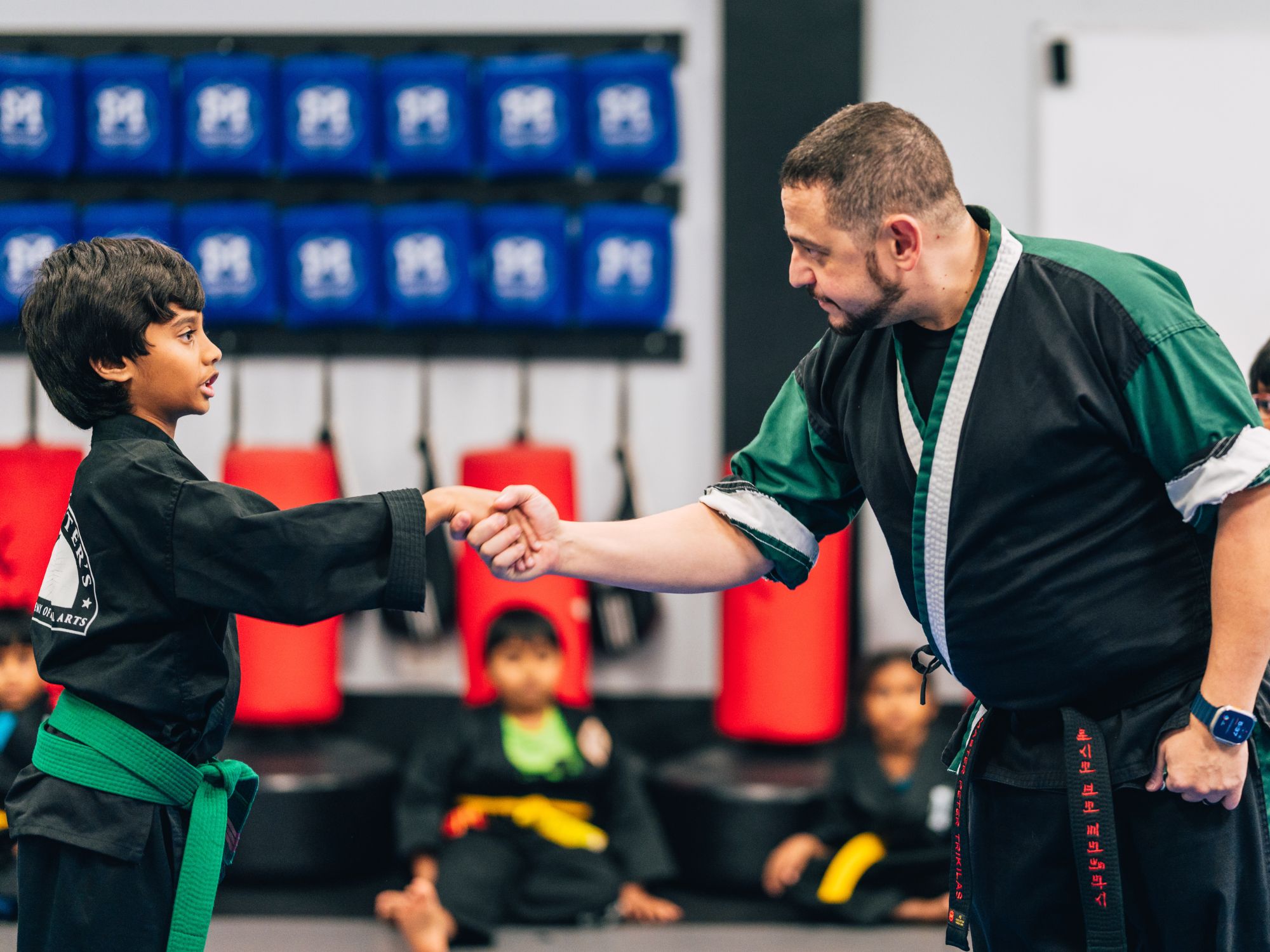
A Green Belt student respectfully shakes hands with Master Peter.
Rules & Authority
Following rules and listening to adults is another key form of respect. At home, this includes routines and responsibilities. At school, it means following classroom rules and directions from teachers.
Parents can support this by being consistent with expectations, consequences, and rewards. Explaining why rules exist helps children understand that rules are meant to support safety and learning. Speaking positively about teachers and school expectations also reinforces respect for authority.
Giving kids age appropriate responsibilities at home, such as chores or managing homework time, helps them practice the necessary accountability that carries over into the classroom to help them unlock their full potential.
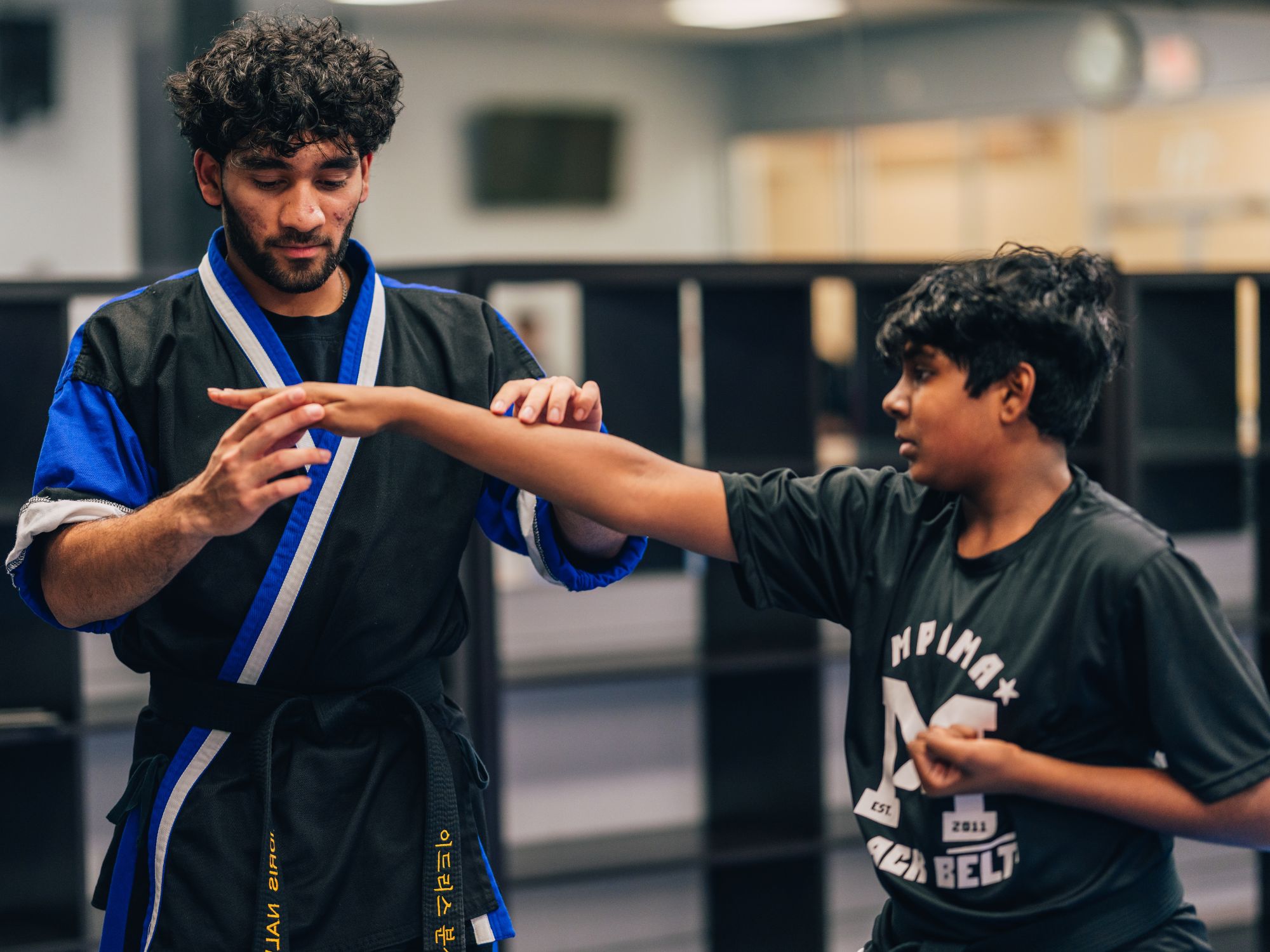
An instructor helps a Black Belt Student perfect his technique.
Self & Others
Respect is shown through actions as much as, if not more than words. Taking care of belongings, respecting personal boundaries, and cleaning up shared spaces all matter at home and at school.
Parents can involve children in daily responsibilities and talk through how their actions affect others. Asking reflective questions helps kids build empathy and awareness. Teaching children to take pride in their effort and manage emotions also builds self respect, which supports respectful behavior toward others.
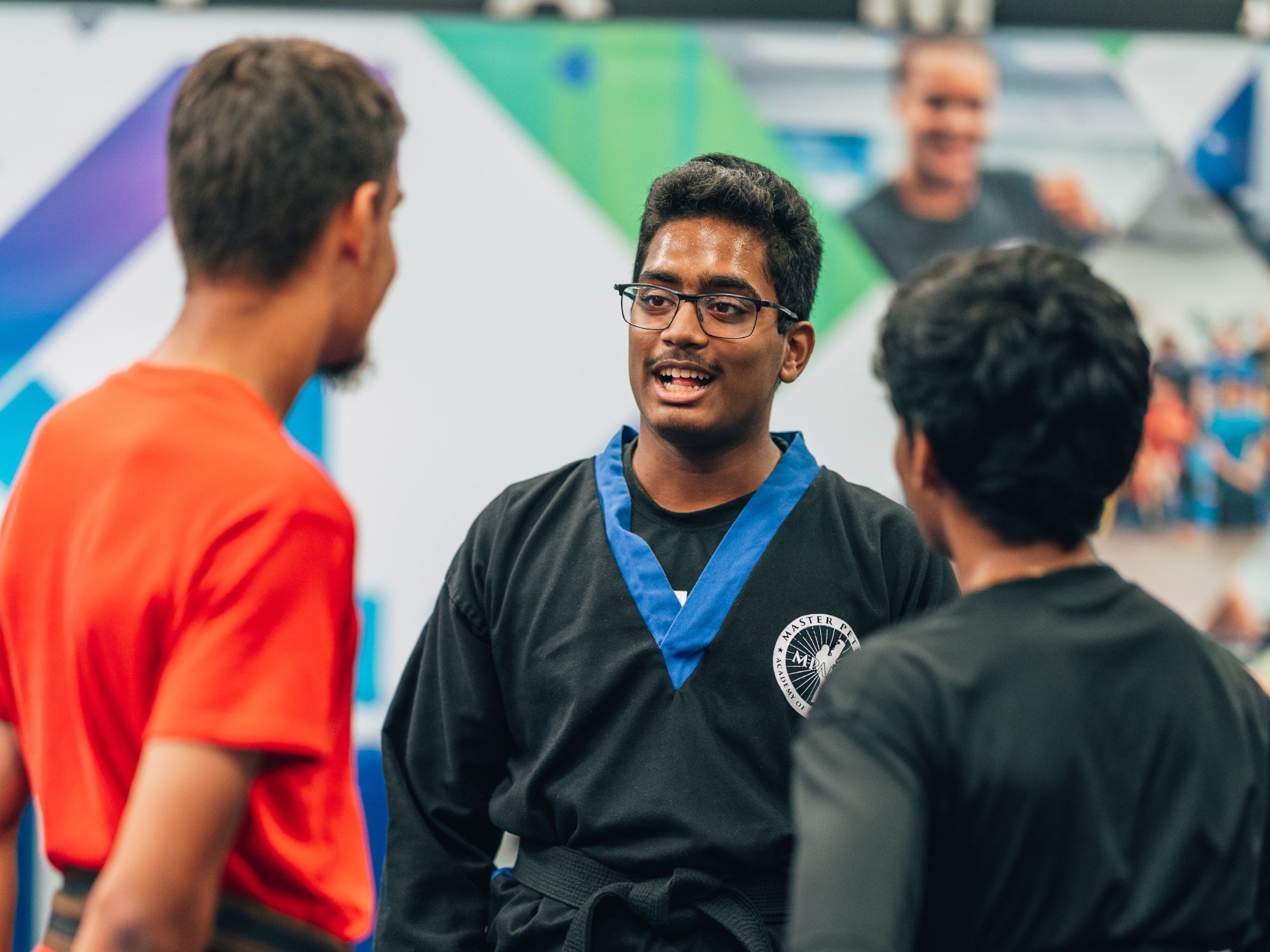
3 students smile as they work together in class.
The MPAMA Way
At MPAMA, respect is practiced daily. Students learn to listen, follow directions, and treat instructors and peers with courtesy from the moment they step onto the mat. Our instructors model respectful behavior and reinforce clear expectations in a positive environment.
We focus on helping kids apply these skills beyond martial arts. The discipline, self control, and responsibility learned at MPAMA directly support respectful behavior at home and at school. We work with families to reinforce these values consistently. In fact, our Intent to Promote form is a way to help our families ensure that their children are meeting and exceeding the standard of respect at home and at school. That’s just one of the many ways we take pride in uplifting the current generation of kids to be respectful and well-mannered individuals.
Conclusion
Respect is a powerful skill that gives children confidence, self control, and a strong sense of responsibility. When kids learn how to show respect at home and at school, they are better prepared to lead, to learn, and to handle challenges with maturity. Every conversation, routine, and expectation you set helps shape the person your child is becoming. With consistent support from parents, schools, and programs like MPAMA, children do more than follow rules. They step forward as capable, respectful young people who are ready to succeed in any environment they enter.