




Learning to express gratitude helps kids build confidence, empathy, and emotional stability. At MPAMA, we view it as a skill that grows through consistent practice, just like martial arts itself. When students take time to appreciate their progress, their instructors, and their peers, they develop a stronger sense of self and a more positive outlook in and out of the dojo. At MPAMA, we believe gratitude isn’t just something to teach, but something to live.
Let’s take a deeper look into how practicing gratitude through martial arts can benefit a child’s self-esteem:
Reducing Anxiety
In martial arts, progress isn’t measured by comparison, but rather by effort. Kids learn to be thankful for even the smallest victories, like mastering a new technique or earning a stripe on their belt. This consistent recognition of progress shifts focus away from perfectionism and self-doubt, replacing it with pride in growth. Over time, this practice helps kids tune out the “what ifs,” and focus instead on what is. When children learn to appreciate their own efforts, they experience less performance anxiety and more self-assurance both on and off the training floor.
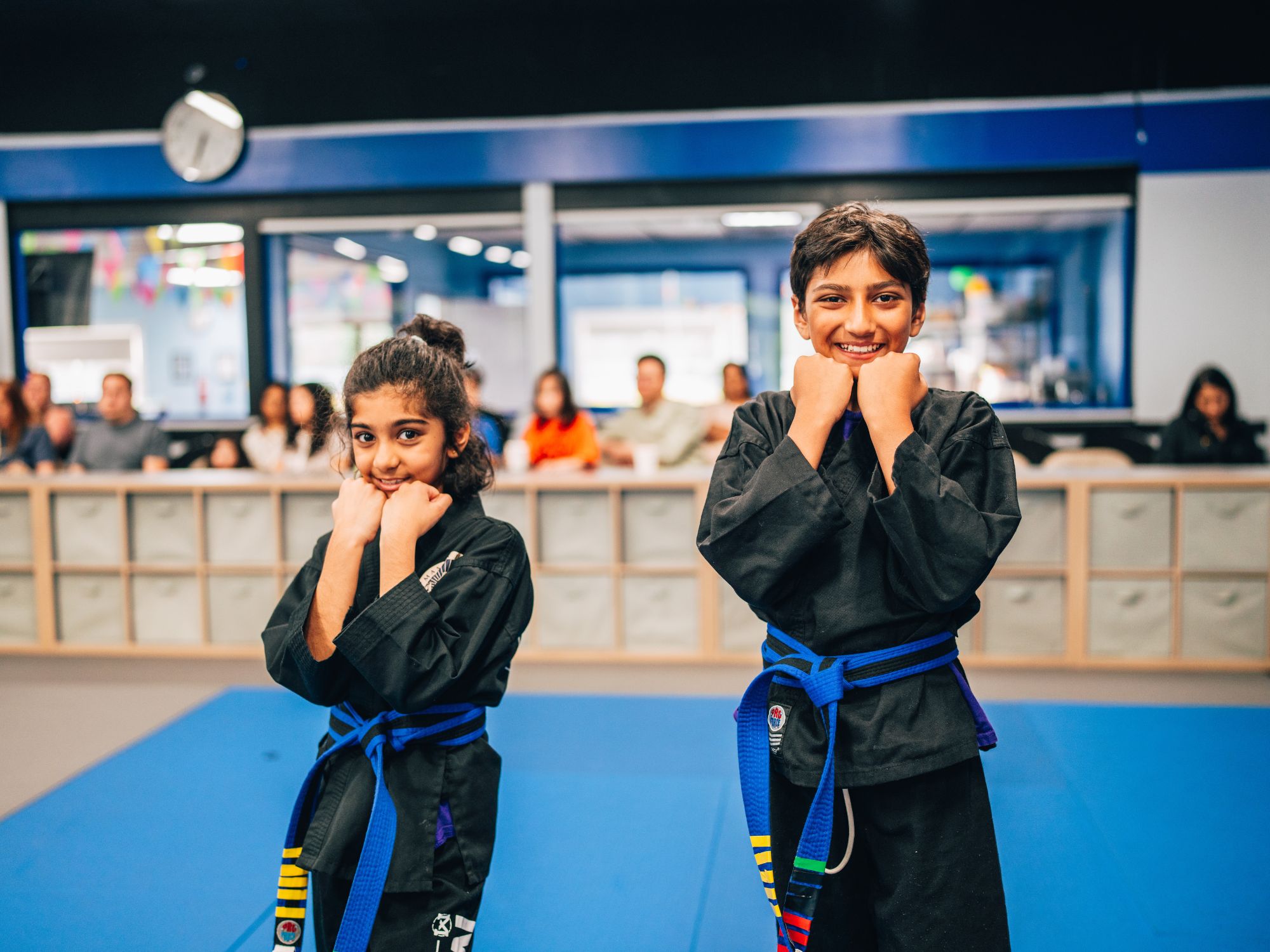
Two Blue Belt students share a smile in guarding stance as they prepare for their belt test.
Encouraging Respect
As one of the most important core values, every martial arts class reinforces mutual respect. Students bow to their instructors, thank their partners, and show appreciation for guidance and feedback. This routine of respect nurtures empathy and understanding. Kids begin to recognize the value of teamwork and cooperation, developing healthier peer relationships and communication habits. When gratitude becomes part of how they interact, it builds emotional awareness that strengthens friendships and reduces feelings of isolation.
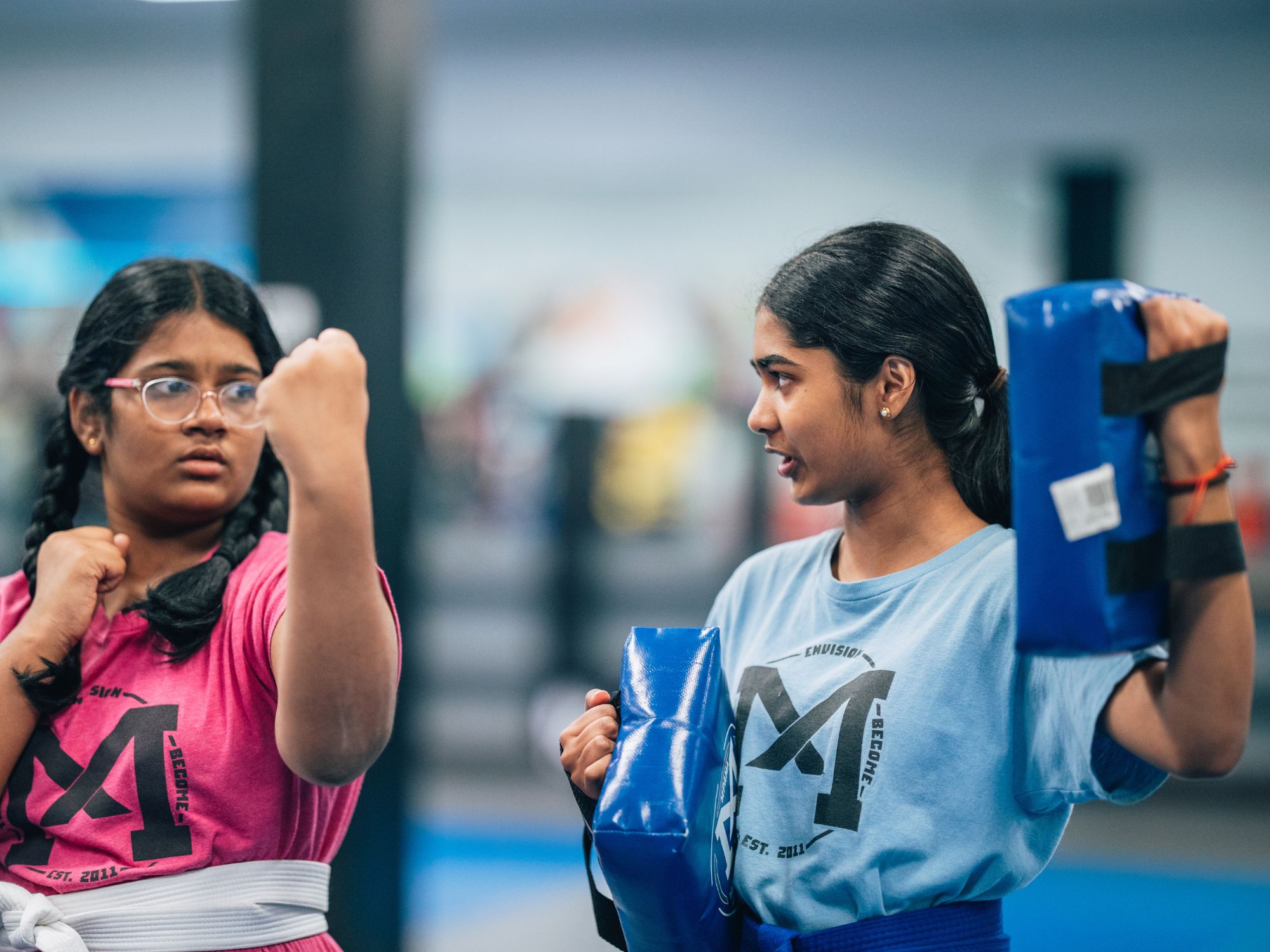
A Blue Belt student helps her White Belt classmate learn a move of their form.
Positive Mindset
Martial arts teaches that setbacks are a natural part of any process or progress. Instead of seeing a forgotten move or failed test as a reason to quit, students learn to be thankful for the lesson it provides. This mindset helps children build resilience, turning frustration into motivation. By focusing on what they’ve gained from each experience, kids cultivate a positive outlook that supports long-term mental well-being. Plus, this skill comes in handy throughout a child’s school career, helping them stay motivated and ambitious to unlock their full learning potential.
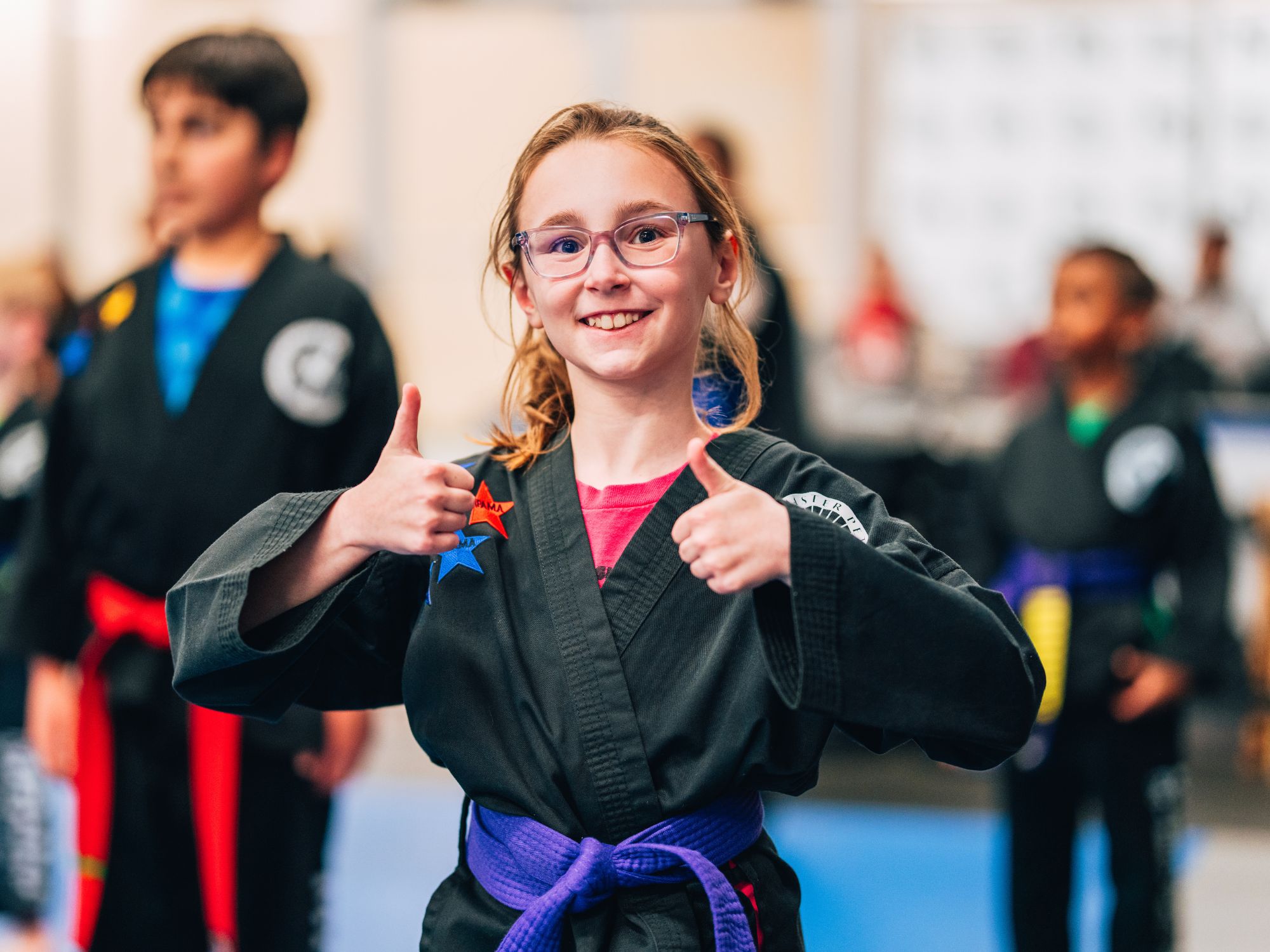
A Purple Belt student poses with two thumbs up and a bright smile during her class.
The MPAMA Way
At MPAMA, gratitude is woven into every part of our program. Instructors take time to highlight effort and improvement, not just outcomes. Students are encouraged to reflect on what they appreciate about their training, their classmates, and themselves. Through discussions, class routines, and community involvement, we help students recognize how expressing gratitude impacts their mindset, relationships, and emotional health. This focus on thankfulness creates a supportive and uplifting atmosphere where kids feel seen, valued, empowered, and above all else, confident.
Conclusion
When children learn to express gratitude through martial arts, they build more than just physical skill; they build inner strength. Gratitude teaches them to approach life with patience, perspective, and positivity. At MPAMA, we recognize the importance of the skills we teach; how they not only help children become better people, but how these skills impact their mental wellbeing for the better. We’re proud to see our students grow into confident, kind, and emotionally balanced individuals who carry gratitude far beyond the mats!